Camping doesn’t have to be complicated. You don’t need expensive gear or years of experience, just the right information and a simple plan.
This blog shows you exactly what matters. You’ll learn the essentials, how to sleep well, and how to set up camp. We’ll cover which gear is worth your money and what to skip.
By the end, you’ll know what to bring, how to pack it, and how to stay comfortable outside. No stress, no guesswork.
Ready to make camping enjoyable? Let’s get started.
The 10 Essentials You Can’t Skip
These are the core items that keep you safe, fed, and comfortable on any camping trip. Think of them as your camping safety net.
1. Shelter
A tent, tarp, or even your car works. You need something to protect you from rain, wind, and sun. Pick what fits your budget and camping style.
Weather tip: Add a rain fly for storms or extra stakes for wind.
2. Sleeping Gear
A sleeping bag rated for the temperature you’ll face, plus a sleeping pad. The pad isn’t just comfortable, it keeps you warm by stopping the ground from getting cold.
Weather tip: Go lighter for summer, a 0°F bag for winter.
3. Water System
Bring water containers and a way to make water safe (filter, tablets, or boiling pot). Most campers need about one gallon per person per day.
Weather tip: Carry extra in heat; insulate bottles in cold.
4. Food and Cooking Tools
Pack easy meals and a simple stove or fire setup. Don’t forget a cooler if you’re bringing fresh food. Bring more snacks than you think you need.
Weather tip: Pack no-cook meals for hot days, extra fuel for cold.
5. Light Sources
A headlamp keeps your hands free. Bring a backup flashlight, too. Fresh batteries are a must.
Weather tip: Keep batteries warm in cold weather.
6. First Aid Kit
Basic bandages, pain relievers, blister care, and any personal medications. Pre-made kits work great for beginners.
Weather tip: Add burn cream for summer, hand warmers for winter.
7. Fire Starter
Matches or a lighter in a waterproof container. Even if you’re not making campfires, you might need heat in an emergency.
Weather tip: Use stormproof matches in wet or windy weather.
8. Navigation Tools
Your phone’s GPS works in most places, but download offline maps. A paper map of the area is a smart backup.
Weather tip: Keep electronics dry and warm.
9. Weather-Appropriate Clothes
Layers beat single heavy items. Rain gear saves trips. Cotton gets cold when wet, so avoid it.
Weather tip: Breathable for heat, fleece/down for cold.
10. Multi-Tool or Knife
Useful for food prep, gear fixes, and dozens of small tasks. A basic folding knife works fine.
Weather tip: Keep dry and oiled in cold or wet trips.
Want to make packing easy? Download our free Car Camping Essentials printable checklist, everything you need for a stress-free camping trip, from tents to cooking gear.
My Top Gear Recommendations
- Coleman Triton+ 2‑Burner Camp Stove: A budget-friendly dual burner stove, rated around US $80-100, noted as a bestseller for car camping use.
- Black Diamond Spot 400 Headlamp: One of the bestseller headlamps in the camping category on Amazon.
- Fire‑Maple Best‑Sellers Camp Stove & Cookware Kit: A kit of stove + cookware marked as “top-selling” by the brand itself.
Gear Shopping for Every Budget
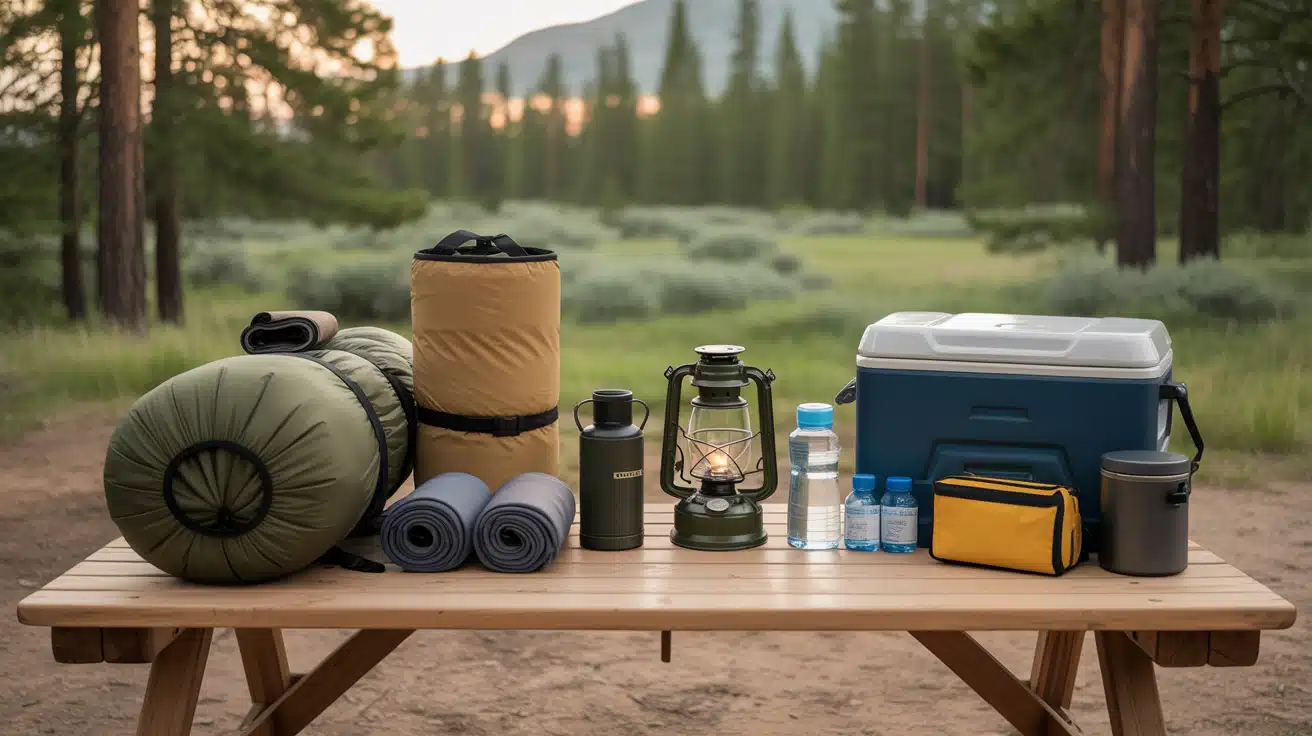
You don’t need to spend a fortune to camp comfortably. Here’s what each budget level gets you.
Budget Breakdown
| Budget Level | Total Cost | What You Get | Best For |
|---|---|---|---|
| Starter Kit | $100-$200 | Basic tent, summer sleeping bag, simple cooler, borrowed items | First-timers, warm weather only |
| Solid Setup | $300-$500 | Quality tent, 3-season sleeping bag, camp stove, decent cooler | Regular campers, multiple seasons |
| Comfort Level | $600-$1000 | Weather-proof tent, premium sleep system, full kitchen setup | Frequent campers, all conditions |
| Premium Gear | $1000+ | Top-tier everything, quick setup, maximum comfort | Serious campers, harsh weather |
Money-Saving Tricks
- Buy used: Facebook Marketplace and REI used gear saves 50% or more
- Rent first: Test expensive items before buying
- Wait for sales: Memorial Day, Labor Day, Black Friday bring big discounts
- Start small: Add gear slowly after each trip
- Multi-use items: One tarp does five jobs
Priority Spending
| Must-Have First | Can Wait | Skip for Now |
|---|---|---|
| Tent or shelter | Camp chairs | Fancy gadgets |
| Sleeping bag | Lanterns | Oversized gear |
| Sleeping pad | Extra cookware | Single-use tools |
| Water container | Nice cooler | Tech accessories |
| Basic cookware | Camping table | Luxury items |
Expensive gear doesn’t make you a better camper. A $50 tent you actually use beats a $500 tent in your garage. Start with what fits your budget. Upgrade based on what you miss most.
Good camping happens at every price point. Buy what makes sense now. Add more as you learn what matters to you.
How to Actually Sleep Well While Camping
The Three Things You Need. A sleeping pad blocks the cold from the ground and adds cushion.
Your sleeping bag should match the coldest temperature you’ll face. Bring a pillow or stuff clothes in a bag to support your neck.
Set Up Smart
Clear rocks and sticks before putting down your tent. Pick flat ground. Avoid low spots where water collects. Face your tent door away from the wind.
Stay Warm at Night
Wear clean, dry layers to bed. Put a beanie on—you lose lots of heat through your head. Eat a small snack before sleep. Your body makes heat while digesting food. Keep tomorrow’s clothes inside your sleeping bag for extra warmth.
Stay Cool When It’s Hot
Unzip your sleeping bag and use it like a blanket. Sleep in light clothes. Keep tent vents open for air flow. Set up camp in shaded areas.
Quick Fixes
Cold ground? Add another pad underneath. Sliding off? Wear fleece to bed. Stuffy tent? Open top and bottom vents.
First Night Truth
You probably won’t sleep great your first night. That’s normal. Most people sleep better on night two.
The Basic Cooking Setup
You need four things: a stove or fire grate, one good pot, basic utensils, and a cooler.
That’s it. Don’t overthink this. A simple two-burner propane stove works better than fancy gear you’ll never use.
Pack meals you can make in one pot. Think pasta, rice bowls, canned soup, or foil packet meals.
Prep ingredients at home and store them in bags or containers. Cut vegetables before you leave. Marinate meat ahead of time.
Put drinks in one cooler and food in another; you open the drink cooler more often. Freeze water bottles to use as ice blocks.
They keep things cold, and you can drink them later. Put items you need first on top.
Essential Kitchen Items
- Cooking: Large pot w/ lid, spatula/spoon, sharp knife, cutting board, can opener, two-burner stove
- Eating: Paper plates/bowls, plastic cups, forks & spoons
- Cleanup: Dish soap, sponge/scrubber, small towel, paper towels, ziplock bags, trash bags
Easy Meal Ideas
- Breakfast: Oatmeal packets, bagels with peanut butter, or scrambled eggs
- Lunch: Sandwiches, wraps, or anything that doesn’t need cooking
- Dinner: Pasta with jarred sauce, hot dogs, burgers, or foil dinners
- Snacks: Trail mix, fruit, crackers, and granola bars
Setup and Cleanup
Put your kitchen area away from your tent. Keep it clean to avoid attracting animals.
Wash dishes right after eating, as dried food is harder to scrub. Pour dirty dishwasher far from camp and water sources.
Leave fancy camping cookware at home. Your regular pots work fine. Skip the camping coffee maker; instant coffee or tea bags are easier. Don’t bring appliances that need electricity.
Keep your camp kitchen simple. One pot, easy meals, and smart prep at home make cooking outside actually enjoyable.
Plan Your Water Supply
Bring one gallon per person per day for drinking, cooking, and cleanup.
For short trips, pack water from home in gallon jugs, freeze some to keep your cooler cold. If getting water at camp, check for spigots first.
Always purify stream or lake water, even if it looks clear, using a filter (instant), tablets (30 minutes), or boiling (1 minute).
Store containers off the ground, drink before you feel thirsty, and keep a bottle in your sleeping bag in cold weather so it doesn’t freeze.
One gallon per person per day. Always purify natural water sources.
Packing Your Car the Smart Way
- Think in “zones.” Keep small, used-often stuff in the doors (sunglasses, bug spray, snacks). Back seat holds rain jackets, first-aid, and daypacks. The hatch is for the main gear.
- Heavy things ride low and near the middle. Water jugs and food bins go on the floor behind the front seats. Your car will handle better, and nothing will slide.
- Color-code your bins. Red is for cooking, Blue is for sleeping, Green is for misc/tools. Label the lids. Now you can grab the right bin even in the dark.
- Load backward from camp setup. The gear you need first should be closest to the hatch: tent, sleeping bags/pads, kitchen bin, chairs. Last in, first out.
- Make a quick-grab pouch. In the glove box or door: lighter + matches, headlamp, multitool, wipes, a few zip bags. These save you when you roll in after sunset.
- Strap it down. A couple of tie-downs stop bins from becoming missiles. Keep fuel and stoves upright with caps on.
- Plan for muddy and wet. Pack two extra bags: one for wet gear, one for dirty shoes. Keep a small towel at the hatch to wipe things before loading.
- Rain hack. Put your tarp or tent footprint on top of the pile. If it’s raining, pull it first, make a quick roof, then set the tent under it.
Find the Right Place to Sleep
Pick your tent spot first, flat ground, no rocks, away from low areas where water collects.
Lay out your tent and stake the corners before putting poles in. Set up your sleeping pads and bags inside while there’s still light.
Put your cooler in the shade and hang a lantern or headlamp somewhere central. Set out chairs near your tent.
That’s it, everything else can wait until morning. Don’t try to organize your whole camp the first night. Just get shelter up, beds ready, and one light source working.
Eat simple food that needs no prep, like sandwiches or snacks. Save the full kitchen setup for tomorrow, when you’re rested.
Safety Basics and Being a Good Camper
- Before you go: Check weather & fire rules, tell someone your plan, pack a small first-aid kit, carry a map, and a headlamp.
- At camp: Choose a flat, safe spot; follow fire bans; never leave flames; store food/trash sealed; wash hands; keep stove stable.
- Leave No Trace: Stay on durable ground, pack out all trash, strain & scatter dish water per rules, keep noise low, respect wildlife.
- Mini emergency kit: Whistle, headlamp, bandages, pain meds, extra water/snacks, emergency blanket.
Honest Gear Advice from People Who Camp
1. “I have an air mattress for the back of my SUV, … window screens, battery powered fan, … headlamps, flashlight …”, Reddit user in r/carcamping “Car Camping Gear Recommendations?” thread.
2. “In general, the absolute essentials … are going to be a backpack, stove, water purification system, cooking/eating gear, sleeping bag, sleeping pad …” Reddit user in r/CampingGear “First time camper gear advice” thread.
3. “Don’t forget a headlamp … A headlamp or other source of light … is definitely a car camping essential.” from a gear list on a camping blog referencing forum-style advice.
4. “Organization is key, bins, crates for kitchen, cooking gear, and keeping the car living/storage area separate.” derived from forum/guide commentary on car-camp setups.
The Bottom Line
You now have everything you need for your first camping trip. Start with the essentials, keep it simple, and don’t overthink it.
Your first night might not be perfect, but you’ll learn more from one real trip than any guide can teach.
Pick a campground, grab your gear, and go. The best camping trip is the one you actually take.
Happy camping!