
Ever sat around a campfire and felt that intense heat on your face? You might think it’s just hot, but campfires can reach temperatures that would surprise you.
Most people don’t realize they’re sitting next to flames that burn hot enough to melt aluminum cans.
This blog explains how hot a campfire is, why it matters, what makes them burn, and how to use this knowledge for the better.
Knowing campfire temperatures will help you build better fires, cook food perfectly, and stay safe outdoors.
How Hot Can a Campfire Get?
It burns between 900 and 1,500 degrees Fahrenheit at its core.
The flames themselves reach around 1,100 degrees on average.
Different parts of fire burn at different temperatures. The hottest spot sits right in the center, where the coals glow bright red and orange.
The outer flames burn cooler, sometimes dropping to 600 degrees. Wood type affects this, too.
The coals beneath can stay at 1,000 degrees for hours, making them perfect for cooking. That’s why experienced campers wait for coals rather than cook over open flames.
Factors Affecting Campfire Temperature
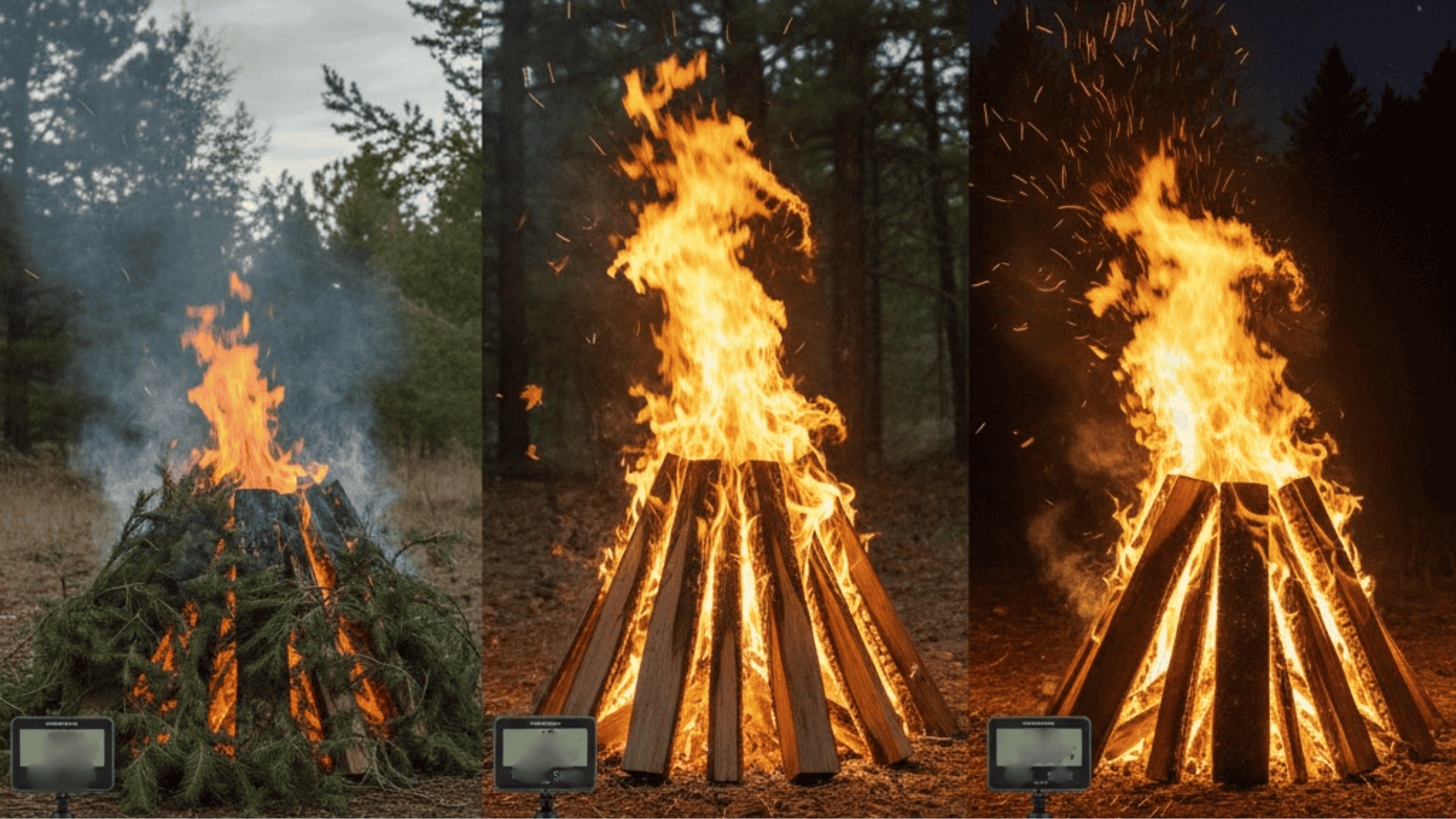
Several things control how hot your campfire burns, and knowing them helps you manage your fire better.
Type of Wood
Different woods produce different heat levels. Hardwoods like oak, maple, and hickory burn hotter and longer than softwoods.
Pine and cedar ignite quickly but don’t maintain high temperatures for extended periods. Dense wood contains more energy per log.
Wood Moisture Content
Wet or green wood burns cooler because energy is first used to evaporate water. Dry, seasoned wood burns faster and hotter.
Always use wood that’s been dried for at least six months. Moisture content below 20% gives the best results.
Oxygen Supply
Fire needs oxygen to burn hot. Loosely stacked wood improves air circulation, while tightly packed wood restricts airflow and lowers temperatures.
Wind increases oxygen and heat. Good airflow makes flames brighter
Fire Size and Structure
Larger fires with more fuel create higher temperatures in the center. The way you arrange logs matters too.
A teepee structure burns hot and fast, while a log cabin design provides steady, controlled heat. Structure affects both temperature and burn duration.
Wood Size and Thickness
Thicker logs burn slower and produce more sustained heat. Thin branches and twigs catch fire easily but burn out fast.
Split wood burns hotter than whole logs because it exposes more surface area. I mix different sizes for better control.
Altitude and Weather
Higher elevations mean lower oxygen levels, which make fires burn cooler. Cold weather requires more energy to maintain fire temperature.
Humidity affects how quickly wood dries and how quickly it burns. Rain or snow can drastically reduce your fire’s heat output.
Fuel Density
Dense hardwoods pack more BTUs per pound than light softwoods. Oak delivers about 24 million BTUs per cord, while pine only gives 15 million.
Denser fuel means longer-lasting, hotter fires that require less frequent refueling.
Best Woods for a Hot, Steady Campfire
Not all wood burns equally; hardwoods burn hotter and produce better coals, softwoods ignite fires quickly. Mix both for optimal results.
| Wood Type | Heat Output | Burn Time | Best For |
|---|---|---|---|
| Oak | Very High | Long | Overnight fires |
| Maple | High | Long | Cooking |
| Hickory | Very High | Long | Smoking meat |
| Ash | High | Medium | Quick heat |
| Birch | Medium | Short | Starting fires |
| Pine | Low | Very Short | Kindling |
| Cedar | Low | Short | Fire starter |
| Fir | Medium | Short | Quick heat |
Measuring Campfire Heat
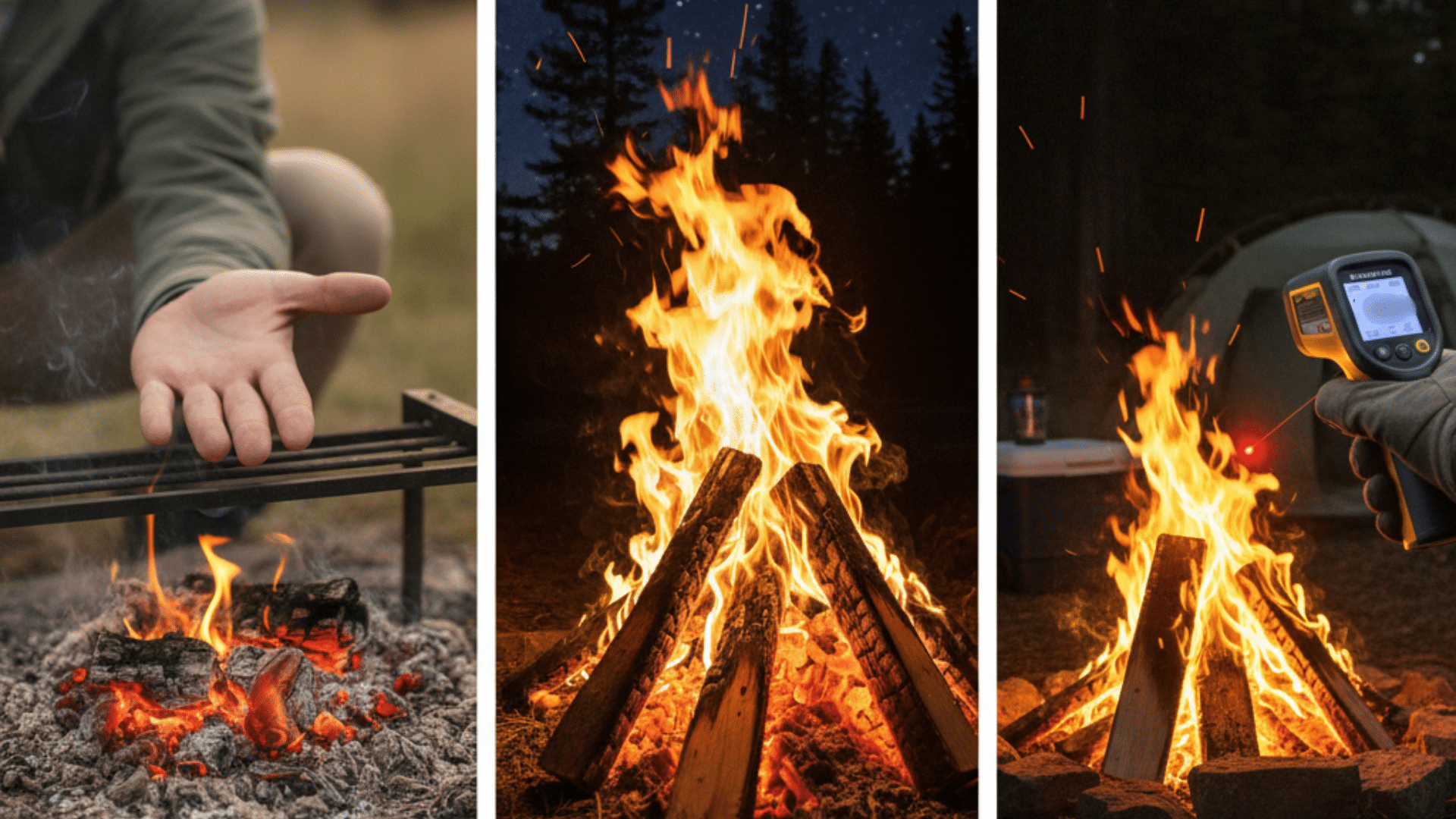
You don’t need fancy equipment to check your fire’s temperature. Here are simple methods that work.
The Hand Test
Hold your hand, palm down, about 6 inches above the coals. Count how many seconds you can keep it there comfortably.
One to two seconds means very hot (around 500°F). Three to four seconds indicates medium-high heat (400°F).
Five to seven seconds suggests medium heat (350°F). This method works great for cooking.
Visual Cues
- Blue flames burn hottest at 1,400-1,650°F, indicating complete combustion with ample oxygen.
- White flames reach 1,300-1,500°F, showing very hot, efficient burning.
- Yellow flames burn at 1,000-1,200°F, common in campfires, indicating moderate heat.
- Orange flames, at 900-1,100°F, appear when the fire cools or has less oxygen.
- Red flames burn at 700-900°F, signifying a lower-temperature fire or smoldering wood.
- Dark red/brown indicates 600-700°F, showing the fire is dying down and losing intensity.
Infrared Thermometer
Point this tool at your fire from a safe distance. It gives you an exact reading instantly. I use mine for precise cooking temperatures. They cost around $20 and last for years.
Best Temperature Zones for Cooking
Your campfire has different heat zones, and using them right makes all the difference. The hottest zone sits directly over the coals at about 1,000°F.
This area works perfectly for searing steaks or getting a quick char on vegetables. Move 6 to 8 inches above the coals for medium-high heat around 400 to 500°F.
Most of the meals cooked here are chicken, fish, and burgers, which turn out great. The outer edges of your fire give you low heat at 250 to 350°F.
Use this zone for slow cooking beans or keeping food hot. Create multiple zones by spreading coal unevenly.
Stack more on one side for high heat and less on the other for gentle cooking.
Average Metal Melting Points
Campfires can get hot enough to melt certain metals.
Here’s what melts and what doesn’t:
- Aluminum: Melts at 1,221°F, common in cans and foil
- Lead: Melts at 621°F easily melted in most fires
- Zinc: Melts at 787°F, used in galvanized metal
- Silver: Melts at 1,763°F, safe around campfires
- Gold: Melts at 1,948° F, won’t melt in typical fires
- Copper: Melts at 1,984°,F requires very hot fires
- Iron: Melts at 2,800°F, completely fireproof for camping
- Steel: Melts at 2,50,0°F, safe for cooking grates
Ideal Cooking Temperatures by Food Type
Different foods need different heat levels.
| Food Type | Temperature | Cooking Time | Heat Zone |
|---|---|---|---|
| Steak | 450-500°F | 4-6 minutes | High |
| Chicken breast | 350-400°F | 15-20 minutes | Medium-high |
| Fish fillets | 300-350°F | 8-12 minutes | Medium |
| Burgers | 400-450°F | 10-15 minutes | Medium-high |
| Hot dogs | 250-300°F | 5-8 minutes | Low |
| Vegetables | 350-400°F | 10-15 minutes | Medium-high |
| Baked potatoes | 300-350°F | 45-60 minutes | Medium |
| Corn on the cob | 350-400°F | 15-20 minutes | Medium-high |
| S’mores | 250-300°F | 2-3 minutes | Low |
Tips to Control Campfire Heat
- Add more wood gradually to increase the heat without creating huge flames.
- Spread the coals apart to lower the temperature or push them together for more heat.
- Use smaller pieces of wood for quick heat adjustments.
- Keep a spray bottle handy to instantly cool flare-ups.
- Build a two-zone fire with a hot and a cool side for better control.
- Let wood burn down to coals before cooking for steady heat.
- Place a grill grate higher or lower to adjust cooking temperature.
- Remove excess ash as it insulates coals and reduces heat output.
- Use hardwood for long, consistent burns instead of softwood spikes.
- Close off airflow with dirt or sand to quickly reduce fire intensity.
Conclusion
Learning about campfire heat zones is essential for cooking.
The type of wood and stacking method affect temperature, which you can measure with your hand, fire color, or a thermometer.
By applying these temperature tips, your meals will improve, and you’ll camp more safely.
What will you cook on your next campfire?