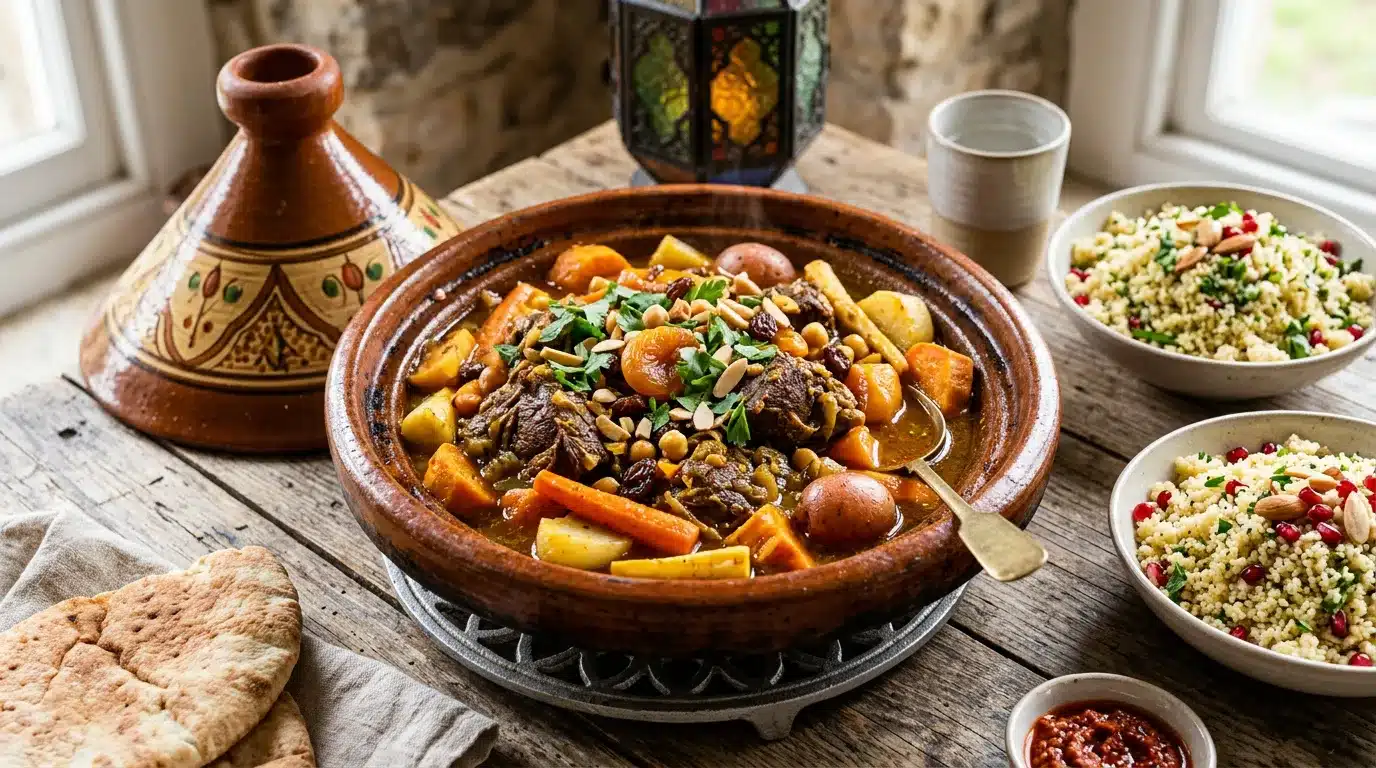
Last October, I made this on a Sunday afternoon while rain hit the kitchen window.
The smell of lamb browning with cinnamon and cumin is the kind of thing that stops you mid-sentence.
A lamb-and-root-vegetable tagine sounds like a project.
And maybe it put you off before the clay pot, the long ingredient list, the North African spice blends you weren’t sure about. But it’s one of the most forgiving things you can cook.
Low heat does most of the work. You just need the right starting points.
What Makes a Tagine Unique
A tagine isn’t just a recipe; it’s a cooking method in one pot.
The word refers both to the North African clay pot with its distinctive cone-shaped lid and the slow-cooked dish made inside it.
That conical lid traps rising steam and channels it back down onto the ingredients.
The result is a deeply flavored braise that requires little liquid.
It’s a practical, ancient technique that also happens to produce some of the most comforting food you’ll ever eat.
No wonder it’s been a staple across Morocco, Algeria, and Tunisia for centuries.
Choosing the Right Cut of Lamb for this Recipe
The cut you choose makes or breaks this dish.
Tagine is a slow, moist cook, so you need lamb that improves with time rather than worsening.
Lamb shoulder is the top pick. It has enough fat and connective tissue to break down beautifully over low heat, turning tender and rich without going stringy.
Bone-in pieces like shoulder chops or neck add extra depth to the braising liquid as they cook.
If you want a cleaner finish, boneless shoulder works just as well, cut into generous chunks.
Avoid lamb leg for this. It’s too lean, and it’ll tighten up and dry out during the long cook.
Root Vegetables that Work Best in Tagine
Not all root vegetables hold up equally when slow-cooked. These are the ones that earn their place in the pot.
| Vegetable | Texture When Cooked | Flavour Notes | Best Used |
|---|---|---|---|
| Carrot | Soft but holds shape | Sweet, earthy | Cut into thick rounds |
| Parsnip | Tender, slightly silky | Nutty, mildly sweet | Halved or quartered |
| Sweet Potato | Very soft, absorbs spice | Creamy, sweet | Large chunks |
| Turnip | Firm to tender | Slightly peppery | Cubed |
| Butternut Squash | Soft, melts at edges | Sweet, buttery | Large dice |
| Celeriac | Holds shape well | Earthy, subtle | Medium chunks |
Tip: Cut root vegetables larger than you think you need to; they shrink and soften quite a bit during cooking.
Ingredients and Their Substitutes
Here’s everything you need, with practical swaps for when the shops or your pantry let you down.
- Lamb shoulder: 800g | Substitute: Bone-in lamb neck or goat shoulder
- Carrots: 2 large | Substitute: Parsnips
- Sweet potato: 1 medium | Substitute: Butternut squash
- Turnip: 1 medium | Substitute: Celeriac
- Canned chopped tomatoes: 400g | Substitute: Fresh tomatoes, blended
- Chickpeas (canned, drained): 400g | Substitute: Cannellini beans
- Onion: 1 large | Substitute: Shallots (use 3–4)
- Garlic: 4 cloves | Substitute: ½ tsp garlic powder
- Fresh ginger: 1 thumb-sized piece | Substitute: ½ tsp ground ginger
- Ras el hanout: 2 tsp | Substitute: Equal mix of cumin, coriander, cinnamon, and paprika
- Ground cumin: 1 tsp | No real substitute
- Ground cinnamon: ½ tsp | Substitute: A small piece of cinnamon stick
- Preserved lemon: 1, skin only | Substitute: Zest of 1 fresh lemon
- Honey: 1 tbsp | Substitute: Maple syrup or a pinch of brown sugar
- Lamb or chicken stock: 300ml | Substitute: Water with a stock cube
- Olive oil: 2 tbsp | Substitute: Any neutral cooking oil
- Salt and black pepper: to taste
Tip: Ras el hanout varies by brand. Taste yours first, as some blends are saltier or more intense.
Building Original Flavor Step-by-Step
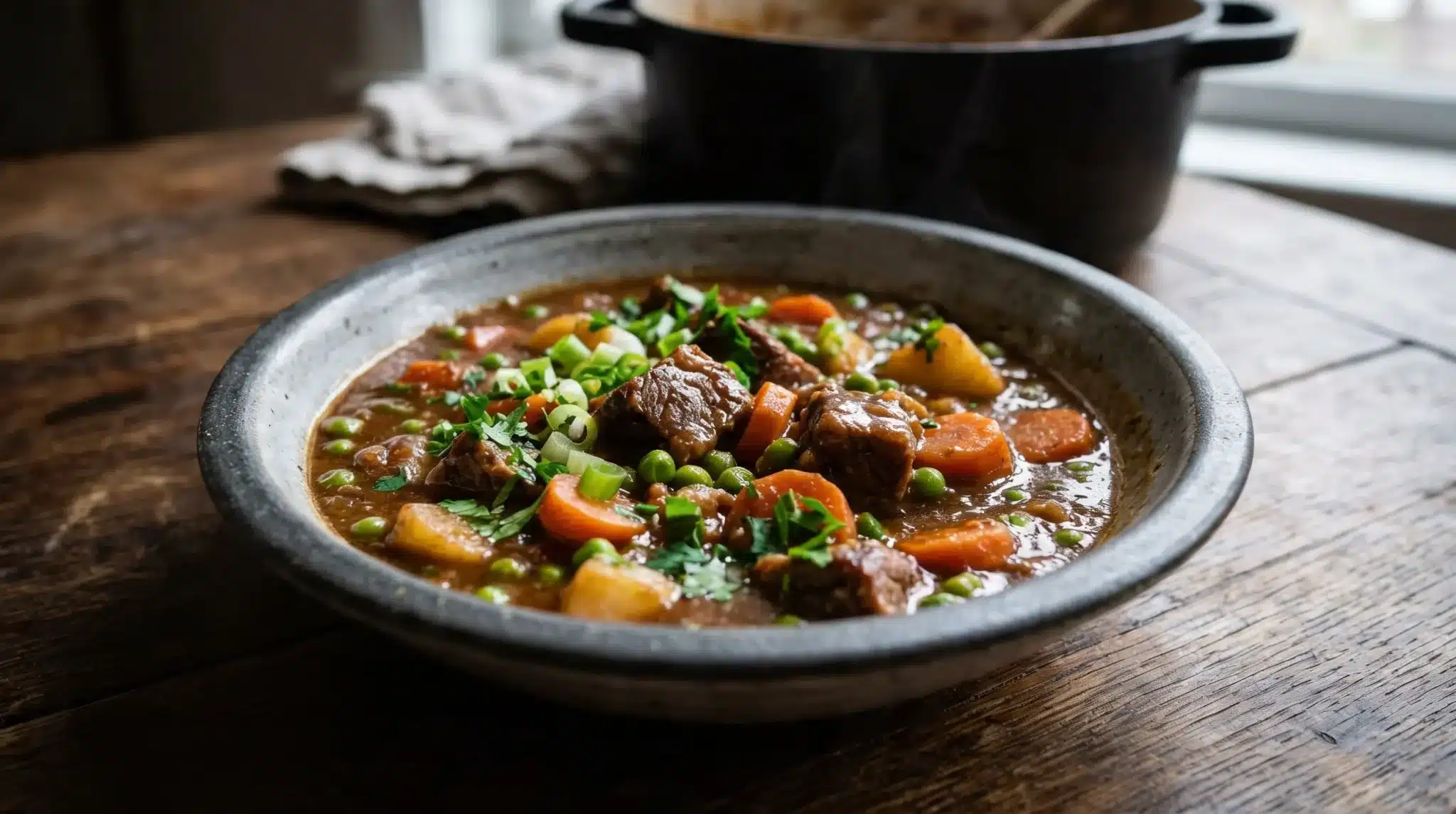
This is where patience pays off. Each step builds on the last step, and you’ll taste the difference.
Step 1: Brown the Lamb First
Pat the lamb dry and season it well with salt and pepper. Sear in batches over high heat until deeply browned on all sides.
Don’t crowd the pot, or it’ll steam instead of sear.
That dark crust isn’t just color, it’s the first and most important layer of flavor in the whole dish.
Step 2: Soften the Base
In the same pot, cook the onion over medium heat until soft and golden, about 8 minutes.
Add garlic and ginger, stir for a minute until fragrant. Those browned bits left behind from the lamb? Leave them.
They’re going nowhere useful just yet.
Step 3: Toast the Spices
Add ras el hanout, cumin, cinnamon, and any other ground spices directly into the onion mix.
Stir constantly for 60 seconds. This blooms the spices in the fat and removes any raw, dusty edge. The kitchen will smell incredible at this point; that’s a good sign.
Step 4: Build the Liquid
Add tomatoes, stock, honey, and preserved lemon. Stir well to combine.
Scrape up every browned bit from the base of the pot as you go; that’s concentrated flavor dissolving straight into your sauce.
Taste it. Adjust salt if needed before anything else goes in.
Step 5: Layer in the Lamb and Vegetables
Return the lamb to the pot and nestle the root vegetables around and on top.
Push everything just below the surface of the liquid so nothing dries out during cooking.
Add the chickpeas last, they’re already cooked and only need time to absorb flavor, not break down entirely.
Step 6: Low and Slow
Cover and cook on the lowest heat possible on the hob, or transfer to the oven at 160°C.
Give it at least 1.5 to 2 hours undisturbed. The lamb should fall apart with a spoon when it’s ready. If it’s still resistant, give it another 20 minutes and check again.
Tagine Pot Alternatives
No tagine pot? No problem. This dish adapts well across different equipment.
1. Traditional clay tagine
Place over a low flame with a heat diffuser underneath to protect the clay. This gives the most traditional result and the gentlest, most even heat.
2. Cast iron casserole (Dutch oven)
The best everyday alternative.
Retains heat brilliantly, goes from hob to oven without issue, and mimics the slow braise of a proper tagine.
3. Heavy-based saucepot
Works fine on the hob over very low heat. Keep the lid on tight and check liquid levels every 30–40 minutes.
4. Slow cooker
Brown the meat and bloom spices separately, then transfer everything to the slow cooker.
Cook on low for 6–8 hours.
How to Achieve that Deep and Rich Taste
A few small habits make a big difference here.
Brown the lamb properly; pale and steamed-looking won’t build the same base.
Toast the spices in the fat before the liquid goes in. Use preserved lemon rather than fresh if you can; it brings a mellow, salty depth that fresh citrus can’t quite match.
A spoonful of honey balances the acidity of the tomatoes.
And resist lifting the lid too often, steam is doing the work, so let it.
Storage and Reheating Without Losing Flavor
- Cool completely before storing. Never refrigerate a hot pot.
- Keeps in the fridge for up to 3 days in an airtight container.
- Freezes well for up to 3 months. Store the sauce and meat together.
- Reheat gently on the hob over low heat with a splash of stock or water.
- Avoid the microwave for reheating if you can; it dries the lamb out.
- Taste and re-season after reheating; flavors can dull slightly in the fridge.
- Chickpeas can soften further on reheating, still delicious, just different in texture.
Recipe Note!
A few things worth knowing before you start.
This tagine genuinely tastes better the next day, as the spices settle, and the sauce deepens overnight in the fridge.
If you’re cooking for guests, make it the evening before and simply reheat slowly before serving.
The smell alone is half the reward.
Also, don’t skip the preserved lemon rind; it’s a small thing that quietly ties the whole dish together.
One jar goes a long way and keeps in the fridge for months.
Frequently Asked Questions (FAQ’s)
1. Can I Make Lamb Tagine without a Tagine Pot?
Yes, a heavy casserole dish or Dutch oven works just as well.
2. How Long Does Lamb Tagine Need to Cook?
At least 1.5 to 2 hours on low heat for tender, falling-apart lamb.
3. Can I Make This Tagine Ahead of Time?
Yes, it tastes even better made the day before and reheated gently.
4. Is lamb tagine freezer-friendly?
It freezes well for up to 3 months in a sealed container.
5. What Can I Use Instead of Preserved Lemon?
Fresh lemon zest can be used as a substitute, though the flavor is sharper.