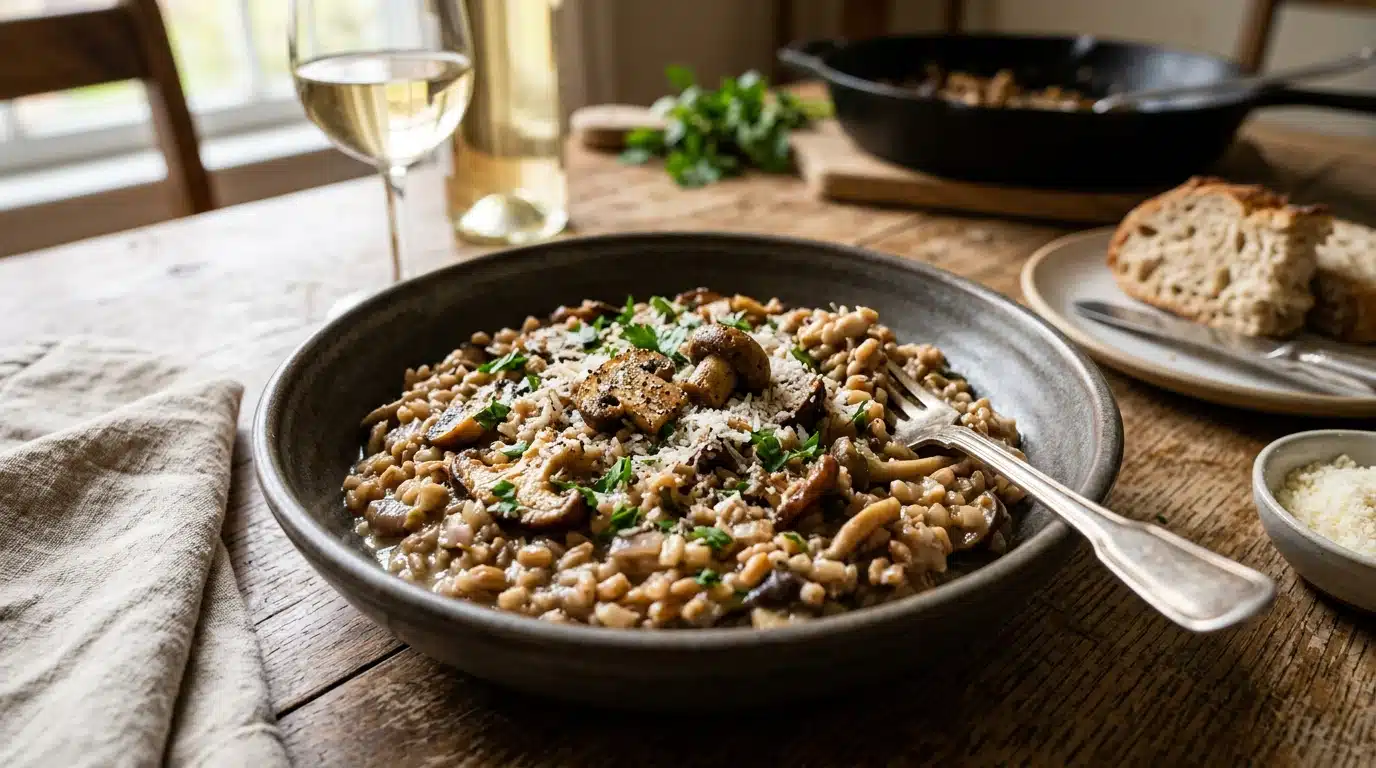
You know that craving something warm, deeply savory, a little earthy. Risotto always comes to mind.
But the usual Arborio rice version has started feeling a bit same-same, hasn’t it?
That’s where mushroom-and-farro risotto comes in.
Farro brings a nutty chew that rice simply can’t replicate, and paired with the deep umami of mushrooms, it’s the kind of one-pot meal that will surprise you.
This blog will walk you through choosing mushrooms and achieving a creamy texture without heavy cream.
Why Farro Changes the Way You Think About Risotto
Most people come to farro risotto a little suspicious.
The first time you taste farro cooked low and slow in warm broth, something shifts. It holds its shape better than Arborio, giving you that satisfying bite all the way through.
The nuttiness adds a whole extra layer of flavor that rice just doesn’t bring.
And because farro is naturally starchy, it still delivers that creamy, cohesive finish you expect from a proper risotto.
It’s not a swap that loses anything; it’s one that genuinely adds.
Understanding Farro Before You Cook
Farro is an ancient wheat grain with a chewy texture and a mild, nutty flavor.
It comes in three forms: whole, semi-pearled, and pearled, and the one you choose affects cooking time.
Pearled farro is the most common and cooks fastest, usually around 25–30 minutes. Semi-pearled takes a little longer.
For this recipe, pearled or semi-pearled works best.
Choosing the Right Mushrooms for Depth of Flavor
Mushrooms are doing the heavy lifting here, so it’s worth thinking about which ones you reach for.
- Cremini (baby bella) mushrooms are a solid everyday choice: earthy, affordable, and widely available. But layering in a second or third variety takes the whole dish to a much more interesting place.
- Shiitake: smoky, meaty, and brilliant for umami depth
- Portobello: bold and substantial, great if you want real body in each bite
- Oyster mushrooms: delicate and silky, lovely for texture contrast
- Dried porcini: even a handful, rehydrated, adds a richness that fresh mushrooms can’t match
A mix of fresh cremini mushrooms with a few dried porcini, stirred in, is a combination that works every single time.
Ingredients With Their Substitutes
Here’s everything you need for a solid mushroom-and-farro risotto that serves 4.
| Ingredient | Quantity | Substitute |
|---|---|---|
| Pearled farro | 1½ cups | Semi-pearled farro (add 10 mins cook time) |
| Cremini mushrooms | 250g | Portobello, shiitake, or oyster |
| Vegetable broth (warm) | 5–6 cups | Chicken broth or mushroom stock |
| Olive oil | 2 tbsp | Butter or a mix of both |
| Shallots | 2 medium | 1 small white onion |
| Garlic cloves | 3, minced | ½ tsp garlic powder |
| Dry white wine | ½ cup | Extra broth + a squeeze of lemon |
| Parmesan, grated | ½ cup | Pecorino Romano or nutritional yeast (vegan) |
| Fresh thyme | 4–5 sprigs | ½ tsp dried thyme |
| Salt & black pepper | To taste | — |
Always warm your broth before adding cold broth shocks the grain and slows down the starch release.
Step-by-Step Cooking Method: Risotto Style with Farro
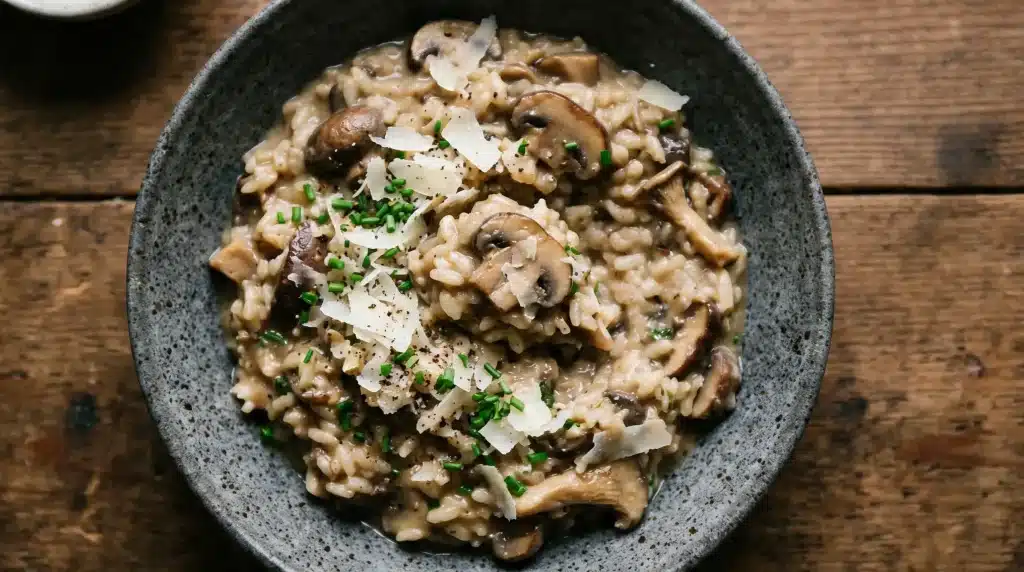
The process mirrors traditional risotto: patient, attentive, and worth every stir.
Keep the broth warm in a separate pot throughout.
Step 1: Rehydrate the Dried Porcini
Pour ½ cup of hot water over the dried porcini and leave them for 15 minutes.
Once soft, lift them out and roughly chop. Strain and keep the soaking liquid, which goes straight into the dish later.
Step 2: Sauté the Aromatics
Warm the olive oil in a wide, heavy-bottomed pan over medium heat.
Add the shallots and cook for 3–4 minutes until soft and translucent. Stir in the garlic and cook for another minute.
Don’t rush this; the base flavor starts here.
Step 3: Cook the Fresh Mushrooms
Add the cremini (or chosen fresh mushrooms) to the pan in a single layer.
Let them sit undisturbed for 2–3 minutes to get color, then stir and cook until they’ve released their moisture and started to turn golden. Season with salt and pepper.
Step 4: Toast the Farro
Stir the farro into the pan and let it toast for 2 minutes, turning it through the mushrooms and aromatics.
This quick toast deepens the nutty flavor before any liquid goes in.
Step 5: Add the Wine
Pour in the white wine and stir until mostly absorbed.
You’ll hear it sizzle and catch that lovely, sharp, acidic smell that’s the alcohol cooking off and the flavor settling in.
Step 6: Build with Broth
Add the porcini soaking liquid first, stirring until absorbed.
Then begin adding the warm broth one ladle at a time, stirring frequently and waiting until each addition is absorbed before adding the next.
Continue for 25–30 minutes, until the farro is tender but still has a little bite.
Step 7: Finish with Butter and Parmesan
Remove the pan from the heat, then stir in cold butter and grated parmesan in two stages until fully melted.
This is where the creaminess comes together. Taste, adjust seasoning, and serve immediately
How to Build Creaminess without Heavy Cream
The creaminess in this dish comes from two things working together: starch and fat.
As the farro cooks slowly in broth, it releases starch that naturally thickens the liquid around it.
The final addition of cold butter and Parmesan is what makes it genuinely silky.
The butter emulsifies into the starchy broth; the Parmesan adds body and a slight saltiness, rounding everything out. No cream needed.
Keeping the heat low at that final stage matters; if it’s too high, the sauce splits rather than binds.
Patience in the last two minutes makes all the difference
Flavor Pairings that Work Exceptionally Well
Mushroom and farro risotto is a brilliant base that takes to other flavors generously.
A few combinations that genuinely work:
- Fresh thyme or rosemary: classic herby earthiness that sits perfectly with mushrooms.
- Truffle oil (a small drizzle, finished): luxurious and deeply aromatic; a little goes a long way.
- Wilted spinach or kale: folded in at the end for color, texture, and nutrition.
- Roasted garlic: sweeter and mellower than raw, it adds real depth without sharpness.
- Lemon zest: a fine grating over the top lifts the whole bowl and cuts through the richness.
- Toasted walnuts or pine nuts: add crunch and a lovely contrast to the softness of the farro.
- Soft goat cheese or ricotta: swirled in at the end for tang and extra creaminess.
Nutritional Value and Why it’s a Smart Choice
Farro outperforms white rice on nearly every nutritional measure: more protein, more fiber, and a lower glycaemic impact, which means steadier energy without the post-meal slump.
Combined with mushrooms, naturally rich in B vitamins and antioxidants, this bowl genuinely nourishes.
Per serving (approx.), based on a 4-serving recipe:
| Nutrient | Amount |
|---|---|
| Calories | ~420 kcal |
| Protein | ~14g |
| Carbohydrates | ~58g |
| Dietary Fibre | ~7g |
| Fat | ~14g |
| Iron | ~15% DV |
| Vitamin B (from mushrooms) | ~20% DV |
Values are estimates and vary based on specific ingredients and portion size
Making it Fit Different Diets and Preferences
Whether you’re hosting a dinner party or meal prepping for the week, this recipe is incredibly adaptable.
1. Vegan
Swap parmesan for nutritional yeast and use vegan butter.
The creaminess still holds nutritional yeast adds a savory depth that’s surprisingly close to the real thing.
2. Gluten-Free
Farro contains gluten, so it’s not suitable as-is.
Swap for short-grain brown rice or a GF grain like millet and follow the same slow-cooking method.
3. Dairy-Free (non-vegan)
Use olive oil in place of butter for the finish, and skip the parmesan or use a dairy-free hard cheese alternative.
A splash of oat cream stirred through at the end works well.
4. High-Protein
Stir in cooked white beans or top with a poached egg to add protein without altering the dish.
5. Lower Sodium
Use a low-sodium broth and hold back on added salt until the very end; Parmesan already brings plenty.
Storage, Reheating, and Texture Recovery Tips
- Store leftovers in an airtight container in the fridge for up to 3 days.
- Farro risotto thickens significantly as it cools. This is normal.
- To reheat, add a splash of warm broth or water and stir over low heat until loosened.
- Avoid the microwave if you can; it dries out the farro and ruins its texture.
- Do not freeze; the grain becomes grainy, and the sauce separates on thawing.
- A small knob of butter stirred in while reheating brings back the gloss.
Recipe Note!
A few things worth keeping in mind before you start.
Farro varies by brand; some pearled types cook faster, so start tasting at 20 minutes instead of waiting for 30.
The dish should be loose and flowing when you serve it, almost like a thick porridge in movement. If it looks stiff in the pot, it’ll set like concrete in the bowl.
When in doubt, add another ladle of broth. Also, the porcini soaking liquid is liquid gold; don’t pour it down the drain.
Just strain it through a fine sieve or a piece of kitchen paper first, as there can be a little grit at the bottom.
Small details, but they genuinely change the result.
Frequently Asked Questions (FAQ’s)
1. Can I Make Mushroom and Farro Risotto Ahead of Time?
Yes, cook it slightly underdone, refrigerate, and finish with warm broth before serving.
2. Is Farro the Same as Spelled?
They’re related but different grains; farro has a nuttier flavor and firmer texture.
3. Can I Use a Rice Cooker for Farro Risotto?
No, the gradual addition of broth requires stirring on the stovetop for proper creaminess.
4. What Wine Works Best in This Recipe?
A dry white like Pinot Grigio or Sauvignon Blanc works well; avoid anything sweet.
5. How do I Know when The Farro is Cooked Properly?
It should be tender with a slight chew, not mushy, not hard in the center.