Baking fish seems easy until you’re standing over a dry, overcooked fillet, wondering where it all went wrong.
Most people overbake fish. It’s the biggest reason home-cooked fish gets a bad reputation.
Timing varies with thickness, fish type, and oven temperature, and once you understand how these factors fit together, perfectly baked fish is genuinely easy.
How Long to Bake Fish?
Get the timing right, and it’s tender, flaky, and full of flavor. Push it even three or four minutes too far, and it will turn dry and rubbery fast.
The Ideal Baking Time for Most Fish
The standard starting point is 400°F (200°C) for most fillets, hot enough to cook through quickly without drying the outside before the center catches up.
From there, the result will depend on the thickness.
The 10-Minute Rule is the easiest way to think about it. For every inch of thickness at the thickest point, allow roughly 10 minutes of baking time.
For Example: 10 to 15 minutes for a one-inch salmon fillet.
Fish Baking Time Chart by Type
Not all fish bake the same way. Thickness, fat content, and cut all affect how long it takes. Use this chart as a quick reference before preheating that oven
| Fish Type | Temperature | Baking Time | Doneness Cue |
|---|---|---|---|
| Salmon | 400°F (200°C) | 12–15 mins | Flakes easily, opaque center |
| Tuna | 400°F (200°C) | 8–12 mins | A slightly pink center is okay |
| Cod | 400°F (200°C) | 25–30 mins | White flakes with a fork |
| Tilapia | 400°F (200°C) | 10–12 mins | Fully white, no translucency |
| Halibut | 400°F (200°C) | 15–18 mins | Firm, flakes in large pieces |
| Trout | 400°F (200°C) | 15–20 mins | Flesh turns opaque, flakes easily |
| Catfish | 400°F (200°C) | 15–20 mins | Golden edges, flakes clean |
Wet fish steams instead of baking, and that’s what leads to that soft, mushy texture nobody wants. Always pat the fish dry with a paper towel before it goes into the oven.
How to Bake Fish in the Oven?
Baking fish in the oven is one of the quickest ways to make dinner. Follow these steps, and it comes out right every time.
Step 1: Gather All the Ingredients
A handful of simple staples is all it takes to get a fillet that’s flavourful, moist, and worth making again.
- Fish fillet – Salmon, cod, tilapia, or haddock, any works.
- Olive oil or melted butter.
- Salt and black pepper.
- Lemon juice
- Garlic (fresh or powdered).
- Fresh or dried herbs, such as parsley, dill, or thyme.
Step 2: Preheat Your Oven
A properly preheated oven makes a real difference.
Putting fish into a cold or under-heated oven throws off the cooking time and can leave you with uneven results, cooked on the outside, underdone in the middle.
Give it a full 10–15 minutes at 400°F (200°C) to reach temperature before adding anything.
Step 3: Prepare Your Baking Dish
Lightly grease a baking dish or line it with parchment paper. This prevents sticking and makes cleanup much easier.
A dish that fits the fillet snugly works best; too much empty space around the fish can cause the edges to dry out faster than the center.
Parchment beats foil for delicate fish, it doesn’t tear the flesh when you lift it.
Step 4: Season the Fish
Pat the fillet dry with a paper towel first; this step is often skipped. Dry fish holds seasoning better and browns more evenly.
Drizzle with olive oil or butter, then add salt, pepper, garlic, lemon juice, and herbs, making sure the whole surface is coated.
Salting fish too far in advance draws out moisture and can affect the texture before it even reaches the oven.
Step 5: Place the Fish in The Oven
Lay the fillet skin-side down in the prepared dish, then slide it onto the center rack. The center rack gives the most even heat distribution.
For fillets of average thickness around an inch, a good starting point is 12–15 minutes at 400°F.
Opening the oven repeatedly to check adds time and drops the temperature fast.
Step 6: Check if it is Done
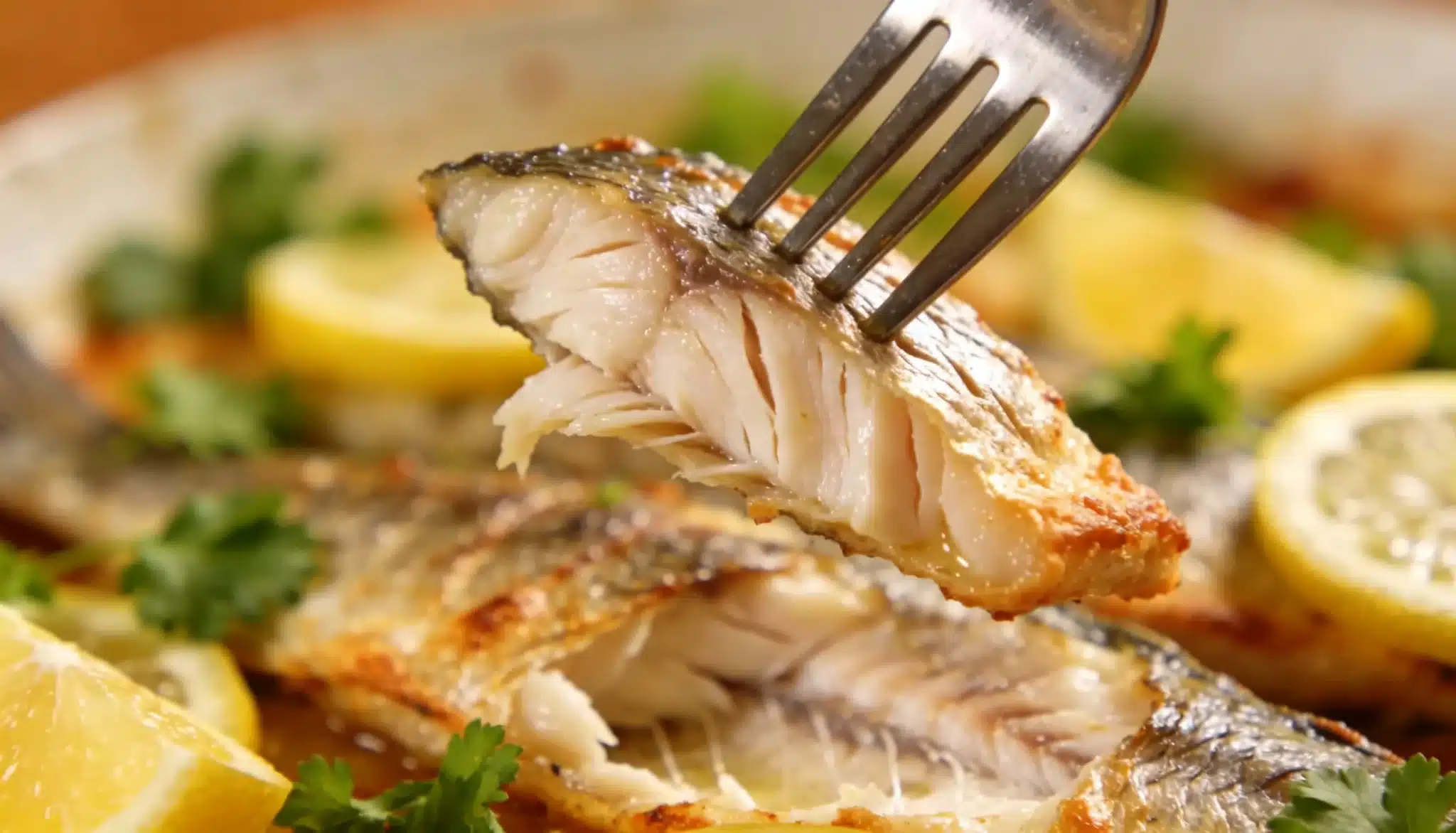
Fish is ready when it flakes easily with a fork, and the flesh is opaque all the way through. The internal temperature should read 145°F (63°C) on a meat thermometer.
Avoid going by color alone; the outside can look done while the center still needs a minute or two.
Fish goes from perfect to dry faster than almost anything else in the oven. When in doubt, check early.
Step 7: Rest and Serve
Pull the fish out and let it sit for 2–3 minutes before serving. It carries over a little heat as it rests, gently finishing the cooking without drying it out.
Squeeze a little fresh lemon over the top just before plating; it lifts everything.
Cutting straight without resting loses the juices before they’ve settled.
How to Tell the Fish is Done?
The following are a few reliable ways to tell if the fish is truly done, apart from timing.
Flaky texture
Press gently on the thickest part with a fork. If it separates into clean layers without any resistance, it’s ready.
If it feels dense or holds together, give it another two minutes.
Opaque appearance
Raw fish is translucent. Cooked fish turns a solid, matte color all the way through.
Check the center, not just the edge; that’s where undercooking hides.
Check the Color
Raw fish looks translucent and glassy. Cooked fish turns opaque, meaning it looks solid white, tan, or pale pink depending on the type.
Check the thickest part, since the edges always cook faster.
Safe internal temperature
145°F (63°C) is the safe minimum temperature for fish.
A basic meat thermometer inserted into the thickest part gives a reading in seconds and takes all the uncertainty out of it.
The Fork Test
Press a fork gently into the thickest part of the fish and twist slightly. If the flesh separates into clean, soft layers, it’s done.
If it resists or looks glassy, give it another 2–3 minutes.
Variations on Fish Baking
A few simple swaps, a different marinade, a flavor-packed crust, or a change in cooking vessel can make it feel completely new.
These variations are easy to pull off on a weeknight, and each one brings something different to the table.
Lemon Herb Baked Fish
A classic for good reason. Coat the fillet in olive oil, fresh lemon juice, minced garlic, and a generous handful of chopped parsley or dill.
The lemon keeps things light and bright while the herbs add depth without heaviness. Bake at 400°F for 12–15 minutes, depending on thickness.
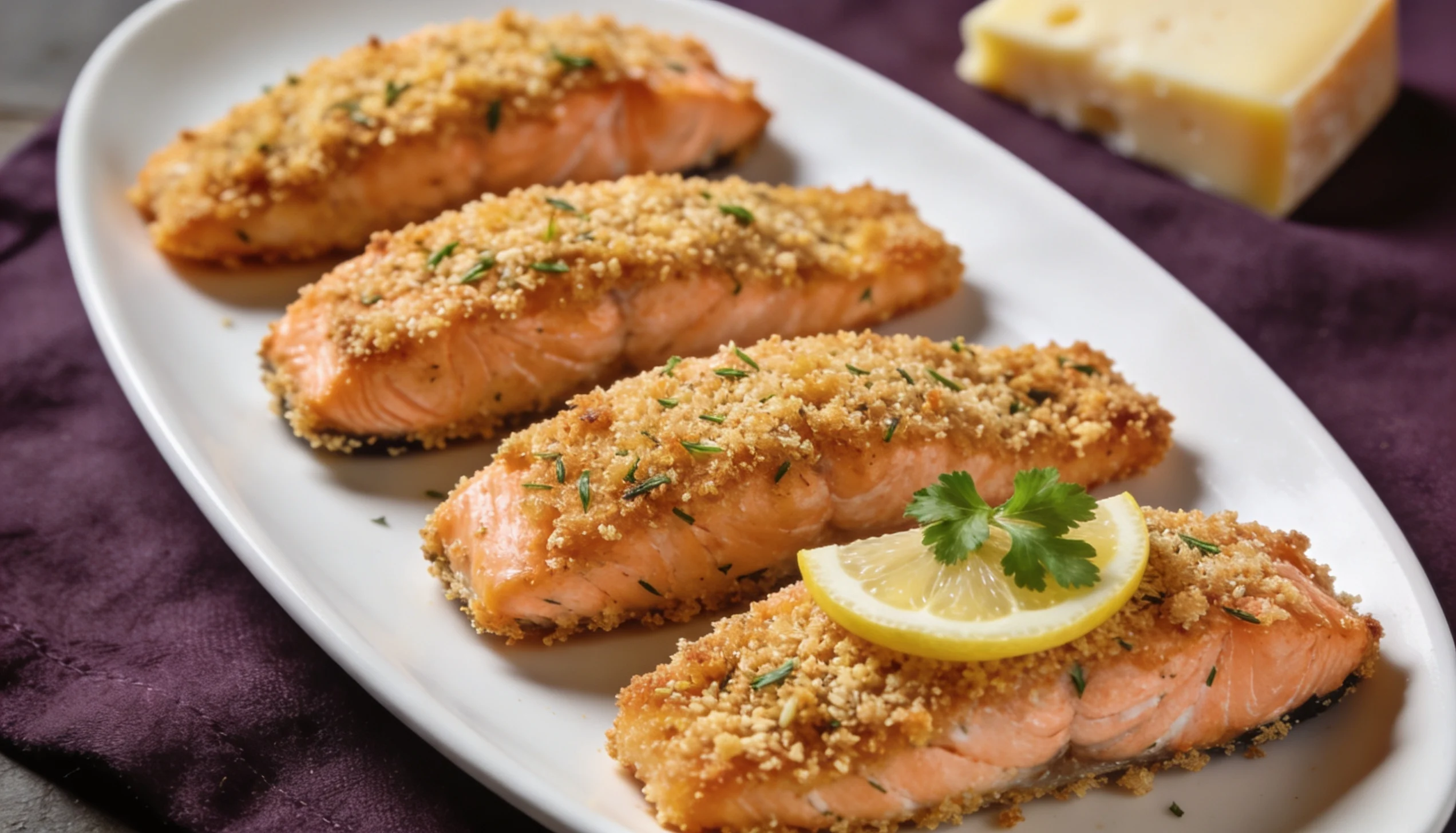
Parmesan Crusted Fish
Mix grated parmesan, breadcrumbs, a little melted butter, and black pepper together, then press the mixture firmly onto the top of the fillet.
It bakes into a golden, savory crust that adds texture without overwhelming the fish underneath. Works especially well with cod or haddock.
Garlic Butter Baked Fish
Melt butter with minced garlic, a squeeze of lemon, and a pinch of paprika, then spoon it generously over the fillet before it goes in.
The butter bastes the fish as it bakes, keeping it tender and adding a rich, warming flavor.
Foil Packet Baked Fish
Wrap the seasoned fillet in a foil parcel with sliced vegetables, a knob of butter, and fresh herbs.
Seal it tightly and bake at 400°F for 15–18 minutes.
The steam trapped inside keeps the fish incredibly moist and infuses it with whatever flavors are packed in alongside it.
Conclusion
Baking fish doesn’t have to be the nerve-wracking part of dinner.
A preheated oven, the ten-minute-per-inch rule, and a meat thermometer take most of the guesswork out.
Pat the fillet dry, season it well, and let it rest before serving.
Whether you keep it simple with lemon and herbs or try the Parmesan crust, the steps here set you up for a good result every single time.
Frequently Asked Questions (FAQs)
1. Can Frozen Fish Go Straight Into the Oven without Thawing?
Yes, but add 5–8 extra minutes and expect a little extra moisture in the dish. Pat it dry first if possible.
2. How Do I Know if My Fish is Done without a Thermometer?
Press it gently with a fork; if it flakes apart and looks opaque all the way through, it’s ready.
3. Can I Prepare the Fish Ahead of Time?
Season it, cover it, and refrigerate it up to 24 hours ahead. Any longer and the salt starts breaking down the texture.