Everyone loves a big bowl of pasta. But after a heavy plate, that sluggish, overstuffed feeling tends to show up uninvited.
Most people want something satisfying and yet not weighed down by a mountain of carbs.
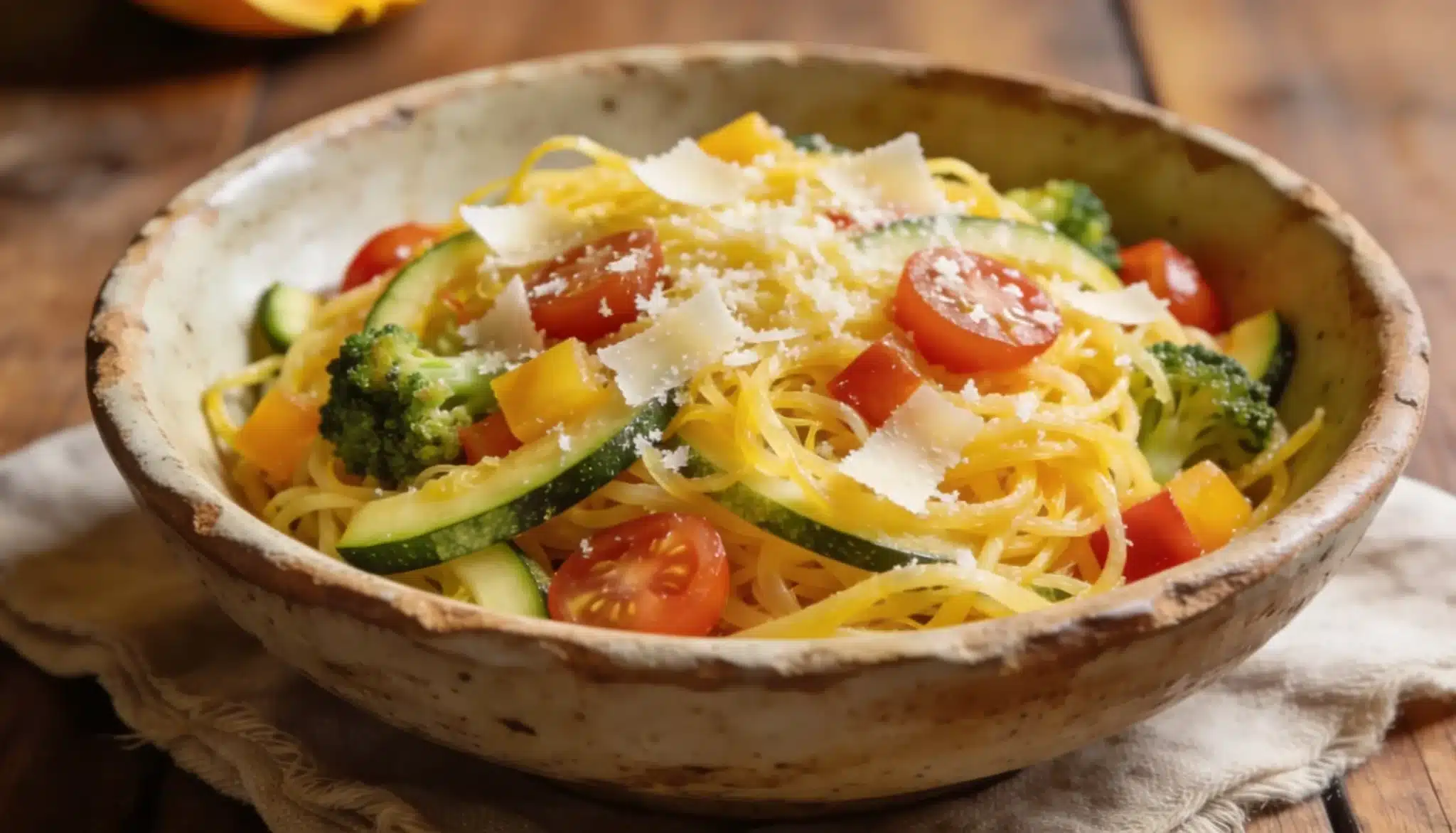
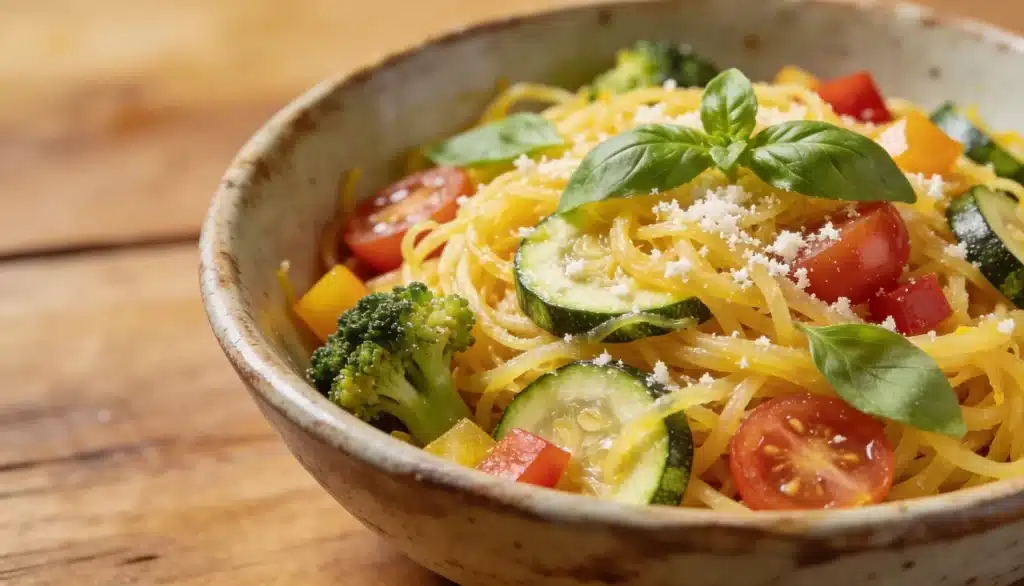
That’s where Spaghetti Squash Primavera comes in. It offers the comfort of a classic pasta dish while keeping things light, colorful, and packed with fresh vegetables.
It’s low-carb, naturally gluten-free, and honestly pretty simple to pull together on a weeknight.
In this post, readers will find out how to make it at home, which veggies work best, and a few handy tips to get the most flavor out of every bite.
Why This Feels so Good to Eat?
At first glance, this dish may seem simple, but it brings together plenty of nutrients in one comforting bowl.
It is light, filling, and packed with goodness from both the squash and fresh vegetables.
- Low in Calories and Carbs: Spaghetti squash has around 42 calories per cup and is much lower in carbs than traditional pasta.
- High in Fiber: Helps support digestion and keeps you full for longer.
- Rich in Vitamins: Contains Vitamin C, Vitamin B6, manganese, and beta-carotene for overall health support.
- Naturally Gluten-Free: Works well for many dietary preferences and lighter meal plans.
- Comforting Yet Light: Gives the comfort of a pasta-style dish without feeling overly heavy afterward.
This dish pairs nicely with fresh salads, grilled chicken, fish, or even toasted whole grain bread if you want a more filling meal. Small additions like Parmesan, olive oil, or lemon juice can also help bring out the flavors even more.
Ingredients
Getting the right ingredients together makes the whole process smoother.
Most of these are everyday vegetables that are easy to find at any grocery store. And the flavor enhancers?
They do the heavy lifting when it comes to taste.
| Ingredient | Quantity |
|---|---|
| Spaghetti squash | 1 large |
| Zucchini | 1 medium |
| Bell peppers | 2 |
| Cherry tomatoes | 1 cup |
| Broccoli florets | 1 cup |
| Carrot | 1 medium |
| Onion | 1 small |
| Garlic cloves | 4 |
| Olive oil | 3 tbsp |
| Lemon juice | 2 tbsp |
| Italian seasoning | 1 tsp |
| Salt and pepper | To taste |
| Basil and Parmesan | For garnish |
Tip: I sometimes add red pepper flakes for a little heat or fresh parsley on top right before serving. It gives the dish extra freshness without needing much effort.
How to Make Spaghetti Squash Primavera?
Follow these five simple steps, and the dish comes together without any difficulty.
Step 1: Prepare and Roast the Spaghetti Squash
Preheat the oven to 400°F. Cut the squash in half lengthwise, then scoop out the seeds with a spoon.
Drizzle olive oil over the inside, then sprinkle salt and black pepper evenly.
Place both halves, face down, on a baking sheet and roast for 40 to 45 minutes, until the flesh feels soft when pressed.
Step 2: Shred the Squash into Strands
Once the squash is out of the oven, let it cool for about 10 minutes before handling.
Then take a fork and scrape the flesh from the skin in long, sweeping strokes. The strands will pull apart naturally and look just like pasta.
Tip: What I tend to do is work from the outer edges toward the center. It gives longer, cleaner strands and honestly makes the whole dish look a lot more appealing on the plate.
Step 3: Sauté the Vegetables
Heat olive oil in a large pan over medium heat.
Add the garlic and onion first, and cook for 2 minutes. Toss in carrots and broccoli, then after three minutes add bell peppers and zucchini.
Finish with cherry tomatoes and season with Italian seasoning, red pepper flakes, salt, and black pepper.
Step 4: Combine Everything Together
Add the squash strands directly into the pan with the cooked vegetables.
Toss everything together gently so the strands are evenly coated with the seasoning and juices. Squeeze fresh lemon juice over the top and give it one final stir.
Taste and adjust salt or pepper if needed.
From my experience, if the mixture feels a little dry, I just add one or two tablespoons of warm water and it brings everything together really nicely without watering down the flavor.
Step 5: Finish and Serve
Plate the dish while it’s still warm. Top with freshly grated Parmesan cheese and a handful of torn basil leaves.
A light sprinkle of red pepper flakes adds a nice little kick if that’s the preference.
Finish with fresh parsley on top for color and a bright, clean flavor.
Adding the cheese too early while the pan is still on the heat. It melts too quickly, clumps, and loses that fresh Parmesan flavor that pulls the whole dish together.
My chicken-loaded version!
For a heartier version, adding chicken works really well without making the dish feel too heavy.
Start by cooking bite-sized chicken pieces in olive oil with a little salt, black pepper, and Italian seasoning until lightly golden.
Set the chicken aside, then sauté zucchini, cherry tomatoes, garlic, and onions in the same pan to let them soak up all the flavor.
Toss in the roasted spaghetti squash strands and cooked chicken, then mix everything gently together.
A squeeze of fresh lemon juice at the end helps brighten the whole dish. I personally like adding a little Parmesan right before serving, as it ties all the flavors together nicely.
Conclusion
Spaghetti Squash Primavera is one of those dishes that proves eating well doesn’t have to be boring or complicated.
It’s colorful, filling, and comes together with little fuss.
Whether someone is cutting back on carbs or just looking for a fresh weeknight meal, this one fits the bill.
Give it a try, play around with the vegetables, and make it personal. Sometimes the simplest swaps lead to the most satisfying meals.
Frequently Asked Questions
1. Can Spaghetti Squash Primavera be Made Ahead of Time?
Yes, both the roasted squash and sautéed vegetables can be stored separately in the fridge for up to three days and combined when ready to serve.
2. Is This Dish Suitable for a Vegan Diet?
Absolutely, just skip the Parmesan or swap it with a plant-based cheese alternative, and the dish stays completely vegan-friendly.
3. Can Frozen Vegetables be Used Instead of Fresh?
Yes, frozen vegetables work fine, but thaw and pat them dry before cooking to avoid excess moisture that can make the dish watery.