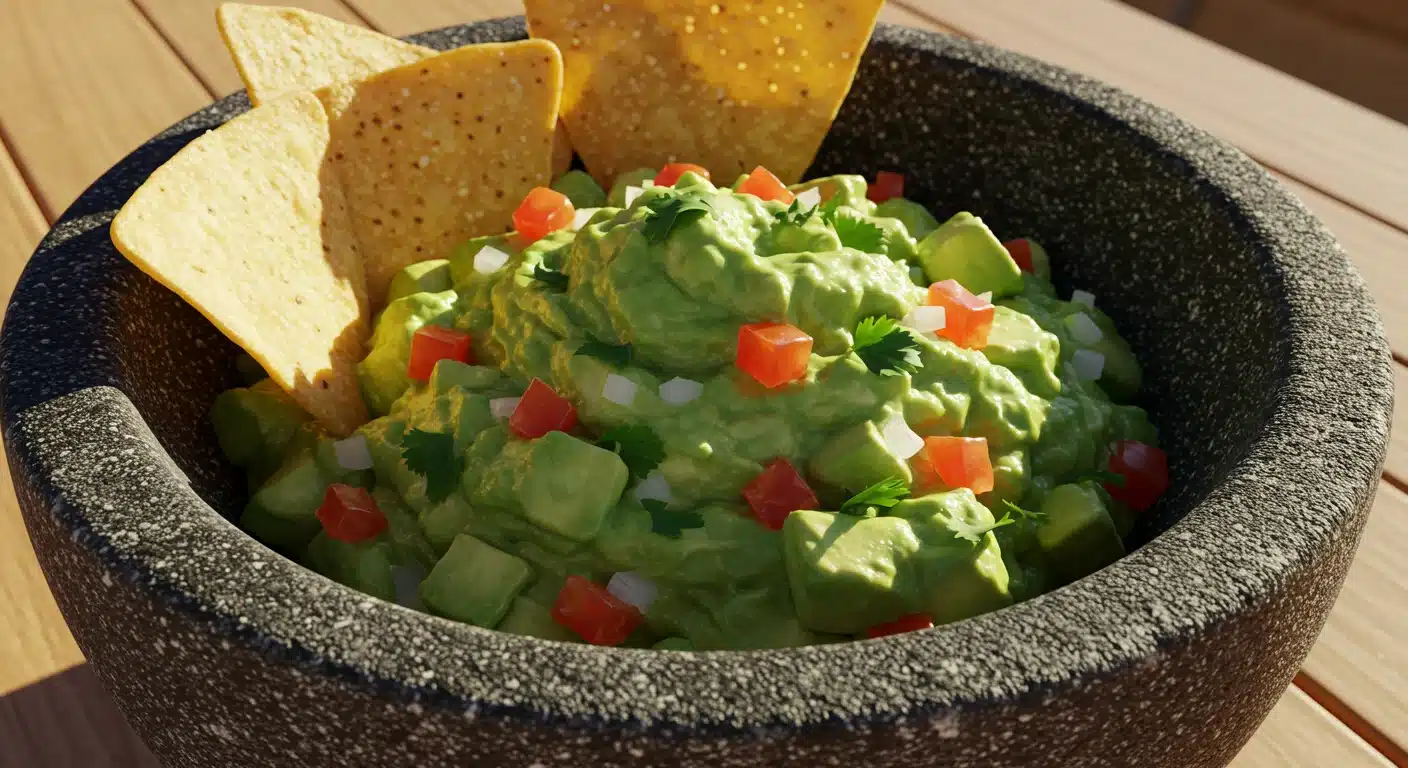
I made a big bowl of guacamole on a Sunday afternoon a few weeks back.
Just ripe avocados, a squeeze of lime, and a little cilantro, and my sister looked over and said, “Should we really be eating that much of it? ” And it made me stop and think.
If you’ve ever wondered if guacamole is good for you or just a guilty pleasure you’ve been justifying with tortilla chips, I’ve got some news.
What is Guacamole Made of?
At its simplest, guacamole is ripe avocados mashed with lime juice, salt, and a handful of fresh ingredients.
I like to add finely diced red onion, a clove of minced garlic, chopped cilantro, and a pinch of cumin.
Some people toss in diced tomato or a little jalapeño for heat. There’s no wrong way to make it, but fresh ingredients make all the difference.
Nutritional Value of Guacamole
Guacamole is high in nutrients.
And that’s largely down to avocado doing the heavy lifting. A single serving provides your body with a balanced mix of healthy fats, vitamins, minerals, and fiber.
What makes it stand out from most dips is that these aren’t empty calories.
| Nutrient | What It Does |
|---|---|
| Potassium | Supports nerve function and helps regulate blood glucose levels |
| Vitamin E & C | Act as antioxidants and give your immune system a real boost |
| Folate (Vitamin B9) | Supports cardiovascular health and cell production |
| Lutein & Zeaxanthin | Protect eye health and reduce the risk of eye-related disease |
| Dietary Fibre | Essential for a healthy digestive system and steady blood sugar |
| Proteins & Carbohydrates | Provide energy and support muscle repair |
| Monounsaturated Fats | Help lower bad cholesterol and reduce inflammation |
Is Guacamole Good for You?
Guacamole is healthy for most people.
But for some, the answer might not be the same; like most foods, it comes with a few considerations worth knowing.
Particularly if you have certain health conditions or dietary sensitivities.
Not Suitable for People with Latex Fruit Syndrome
Those with a latex allergy can sometimes react to avocados due to cross-reactive proteins.
Always consult a healthcare professional if you suspect a food allergy.
For People with Kidney Disease
Avocados are rich in potassium.
And people with chronic kidney disease are often advised to limit high-potassium foods, as impaired kidneys can struggle to filter excess potassium from the blood.
Blood Thinning Medication Interactions
The Vitamin K content in avocados can interact with blood-thinning medications like warfarin.
If you’re on anticoagulants, keep your intake consistent. Discussing it with your doctor is the sensible approach.
Health Benefits of Guacamole
To answer the question of is guacamole good for you, learning about its health benefits is very important.
It is known to offer many health benefits.
If consumed consistently and as a limited option in the daily diet, guacamole benefits the body in many ways.
1. It is Good for Your Heart
Guacamole is rich in monounsaturated fats.
This helps in decreasing the bad cholesterol (LDL) levels, which makes it not only good for your taste buds, but also for your heart.
The high oleic acid levels are also known to reduce the inflammation levels and the risk of cardiovascular disease.
2. It Helps Manage Blood Sugar Levels
Studies suggest that adding guacamole to your daily diet can drastically improve blood sugar levels.
The high fiber content helps regulate metabolism, leading to lower blood sugar levels.
The high fat content reduces the risk of a large spike in blood glucose levels after a carbohydrate rich meal.
3. It Improves Gut Health
Guacamole is high in fiber, which is essential for the digestive system as it promotes the growth of good bacteria.
Making avocados, the main ingredient in guacamole.
A part of your daily diet reduces the bile concentration levels, which prevents the growth of harmful bacteria, resulting in a healthy digestive system.
4. It’s a High Satiety Food
Due to its high fiber content and its richness in monounsaturated fats, guacamole is considered a high satiety food.
Consuming guacamole or a whole avocado once can suppress hunger for more than 6 hours.
This helps in reducing the daily calorie consumption, leading to a healthier lifestyle.
How Can You Maximize Guacamole Health Benefits?
Guacamole offers many health benefits and a high nutritional value, making it a dietitian’s favorite go to ingredient.
But consuming it alone is not enough to unlock its full potential.
Despite being considered healthy, there are some things you should know before including it in your diet to avoid the potential negative effects.
Make it Fresh at Home
Store-bought guacamole is convenient.
But most versions are loaded with added sodium, preservatives, and bulking agents that dilute the nutritional value.
Fresh avocados, a squeeze of lime, real garlic, and a handful of cilantro are all you need.
It takes ten minutes, tastes far better, and your body will benefit far better by skipping the additives.
Limit Your Portions
For all its health benefits, guacamole is calorie-dense.
Avocados are rich in fat, healthy fat, yes, but fat nonetheless. So eating it without any awareness of quantity can quietly tip your daily calorie intake.
A serving of around two to four tablespoons is the sweet spot.
Be Smart About What You Pair it With
Guacamole piled onto tortilla chips, or nachos, turns a nutritious dip into a high-calorie snack pretty quickly.
Instead, try it with cucumber rounds, carrot sticks, bell pepper strips, or radish slices.
These veggie pairings add crunch, fiber, and extra nutrients without the excess sodium and refined carbs.
Quick and Easy Homemade Guacamole Recipe
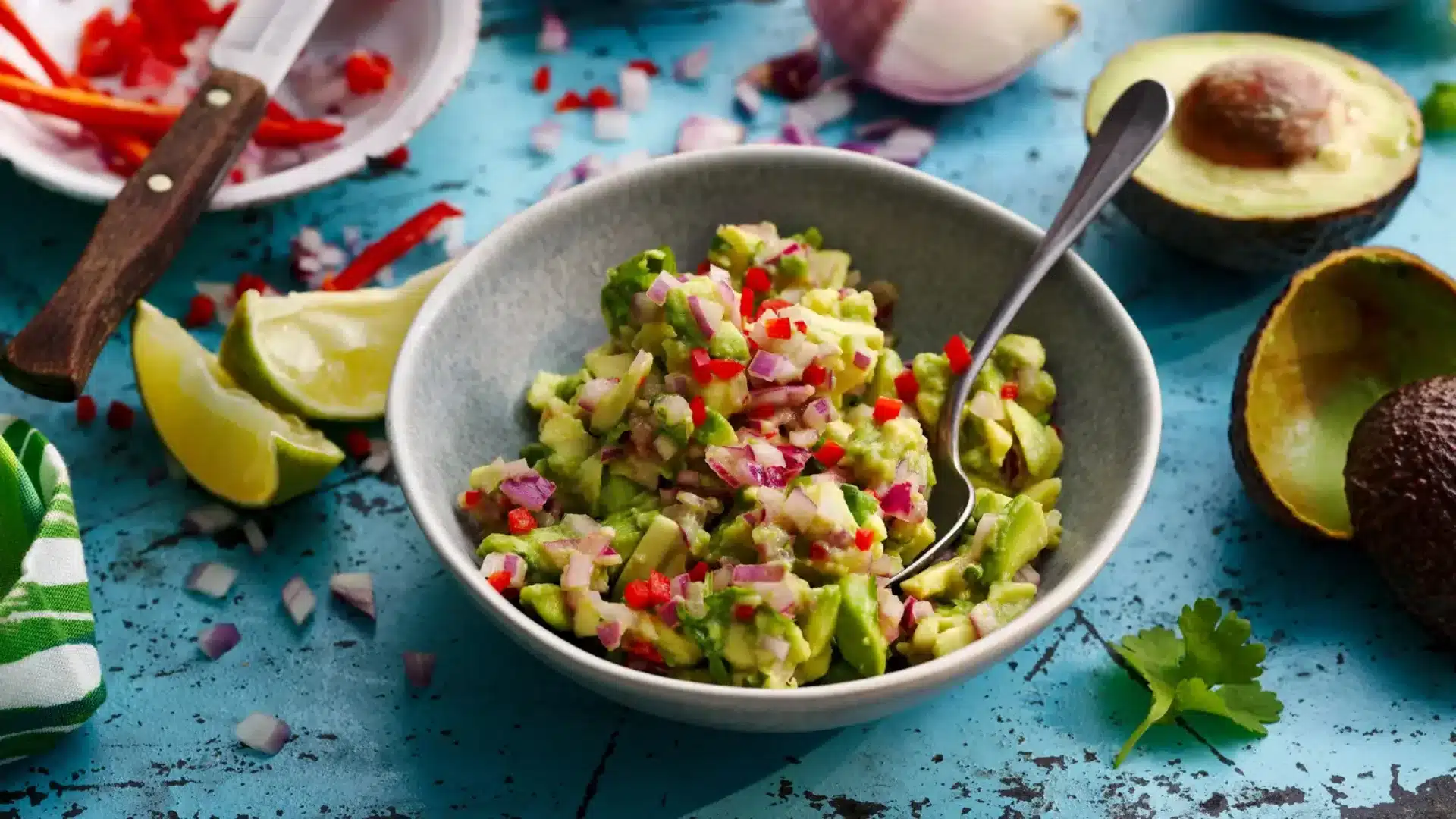
This recipe uses simple, fresh ingredients, comes together in about ten minutes, and tastes considerably better than anything you’ll find in a tub at the supermarket.
The key is ripe avocados and a little patience with the seasoning.
Ingredients
| Ingredient | Quantity | Notes |
|---|---|---|
| Ripe avocados | 3 | Should feel slightly soft when gently pressed |
| White or red onion | 2 tablespoons | Finely diced |
| Fresh tomato | 1 medium | Deseeded and diced |
| Fresh cilantro | 1 tablespoon | Roughly chopped |
| Garlic cloves | 3 | Minced or finely grated |
| Lime | ½ | Juice only |
| Salt | To taste | Start small, you can always add more |
Step 1: Choose and Prep the Avocados
Start by selecting avocados that are genuinely ripe.
This is the single most important part of the whole recipe. Halve each avocado lengthways, twist the two halves apart, and remove the stone.
Scoop the flesh out cleanly with a large spoon and place it directly into a wide mixing bowl.
Give the flesh a quick visual check for any dark or stringy patches and remove those before mashing.
I always buy my avocados a couple of days ahead and let them ripen on the kitchen counter. If they’re rock hard at the shop, they’re not ready.
Step 2: Mash to Your Preferred Texture
Using a fork or a potato masher, begin working the avocado flesh until it reaches your preferred consistency.
Some people like it completely smooth, but I prefer mine with a little texture, slightly chunky.
That helps pieces of avocado in every bite rather than something that looks more like baby food.
Work quickly here, as avocado starts to oxidise (turn brown) once exposed to air.
Step 3: Add Your Fresh Ingredients
Add the finely diced onion, deseeded tomato, chopped cilantro, and minced garlic to the mashed avocado.
Squeeze in the juice of half a lime and add a small pinch of salt to start.
Stir everything together gently but thoroughly so that all the ingredients get evenly distributed rather than sitting in separate pockets throughout the bowl.
Step 4: Taste, Adjust, and Serve
Taste the guacamole and adjust the seasoning carefully. A little more lime if it needs a lift and an extra pinch of cilantro if you want more freshness.
Once it tastes right to you, serve it straight away.
Guacamole is always best eaten fresh, but if you need to store it, press a sheet of cling film directly onto the surface to limit air contact and keep it in the fridge for up to a day.
Conclusion
Is guacamole good for you? Yes.
And not just in the “well, it could be worse” kind of way. It’s full of healthy fats, fiber, vitamins, and minerals that do real work inside your body.
Guacamole provides all the essential nutrients you need to make it part of your everyday diet.
It also serves as a healthier alternative for dips and sauces.
Because guacamole is high in calories, it is advisable to consume it mindfully and pair it with other healthy foods.
Frequently Asked Questions (FAQs)
1. Is Guacamole Good for You to Eat Every Day?
Yes, you can eat guacamole daily in moderate amounts. It’s healthy but high in calories, so avoid overeating.
2. What Not to Mix with Avocado?
Avoid mixing avocado with excessive sugar, deep-fried foods, or alcohol, as this reduces its health benefits.
3. Which is Better for You, Guacamole or Avocado?
Plain avocado is slightly healthier than guacamole, since guacamole may include salt or extra ingredients.