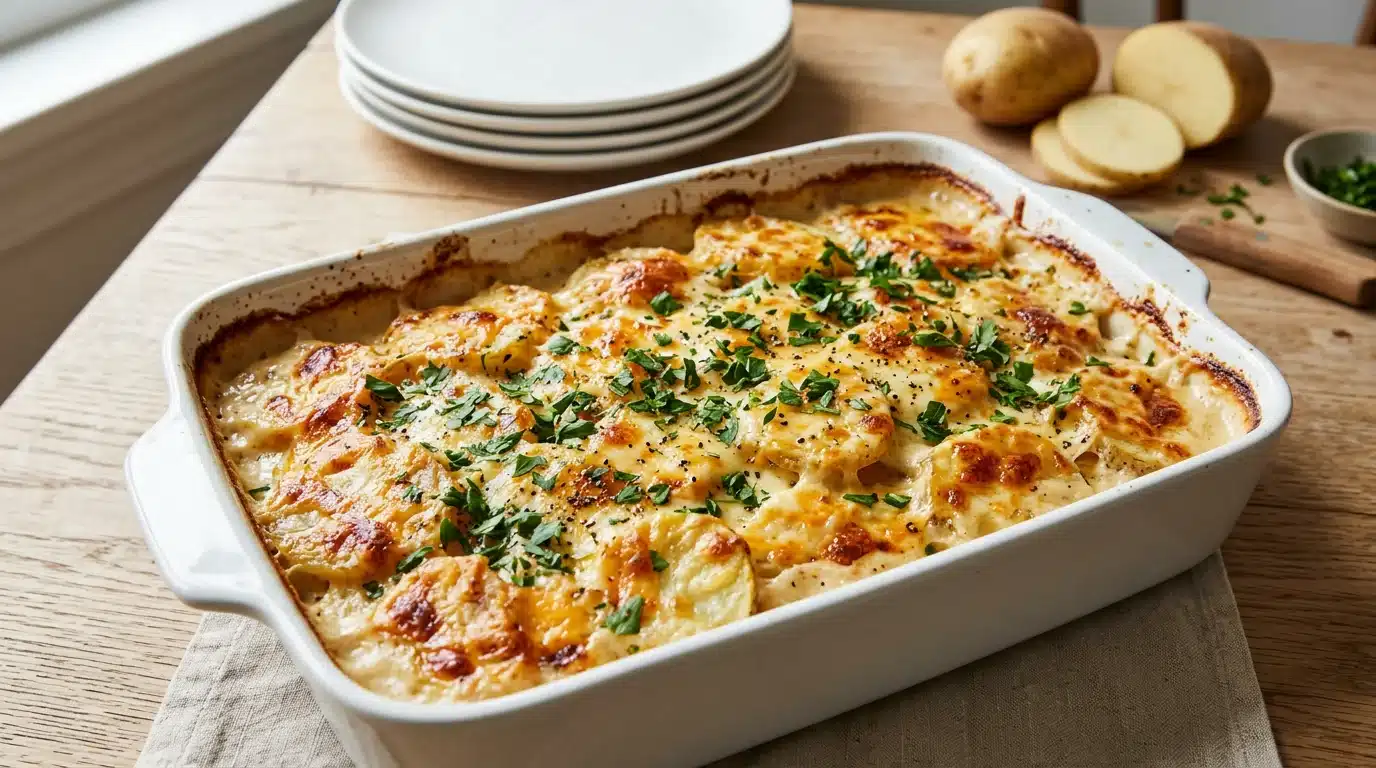
There’s a dish that makes people go quiet at the dinner table.
Not awkward, quite the kind where everyone’s too busy eating to talk. That’s what a good potato gratin does.
The problem? Most versions come out watery, bland, or with layers that slide apart the moment you cut in.
Yukon Gold potatoes change that. Their naturally buttery flesh and thin skins mean they hold their shape, absorb cream beautifully, and deliver that rich, layered bite every single time.
This blog directs you from slicing to creating a golden, bubbling crust that fills the kitchen with aroma.
What Sets Yukon Gold Potato Gratin Apart from Other Bakes
Not all potatoes are built for gratin. Russets tend to fall apart and soak up too much liquid.
Waxy red potatoes hold their shape but lack that creamy, melt-in-your-mouth quality you’re after.
Yukon Golds sit right in the middle, and that’s exactly why they work so well here.
Their flesh is dense enough to hold clean layers, yet soft enough to absorb every bit of cream and garlic as they bake. The natural buttery flavor means you get depth without overloading the dish with fat.
The result is something genuinely different, structured, rich, and golden in a way other potato bakes rarely manage.
Ingredients for a Classic Gratin
Simple ingredients, done right, that’s all this dish needs.
The Essentials
- Yukon Gold potatoes: substitute with Maris Piper if unavailable
- Heavy cream: substitute with half-and-half for a lighter version
- Gruyère cheese: substitute with Emmental or sharp cheddar
- Garlic: fresh cloves, minced or thinly sliced; garlic powder works in a pinch
- Unsalted butter: for greasing and layering; salted butter works, just ease up on added salt
- Salt and black pepper: season every layer, not just the top
- Fresh thyme: adds an earthy, herby note; dried thyme or rosemary both work well
Optional but Worth it
- A pinch of nutmeg: adds quiet warmth to the cream
- Parmesan: scattered on top for extra crunch
Preparing the Potatoes for Layering
How you prep the potatoes matters just as much as how you cook them.
Start by peeling your Yukon Golds, then slice them as thinly and evenly as possible, around 3mm is ideal.
A mandoline makes this effortless, though a sharp knife works fine with a little patience.
Uniform slices aren’t just about looks; uneven cuts mean some layers turn mushy while others stay underdone.
Once sliced, keep them submerged in cold water to prevent browning. Pat them completely dry before layering, though excess moisture is what makes a gratin watery.
Dry potatoes absorb the cream properly, which is exactly what gives each layer that soft, rich texture.
Building the Gratin Layers
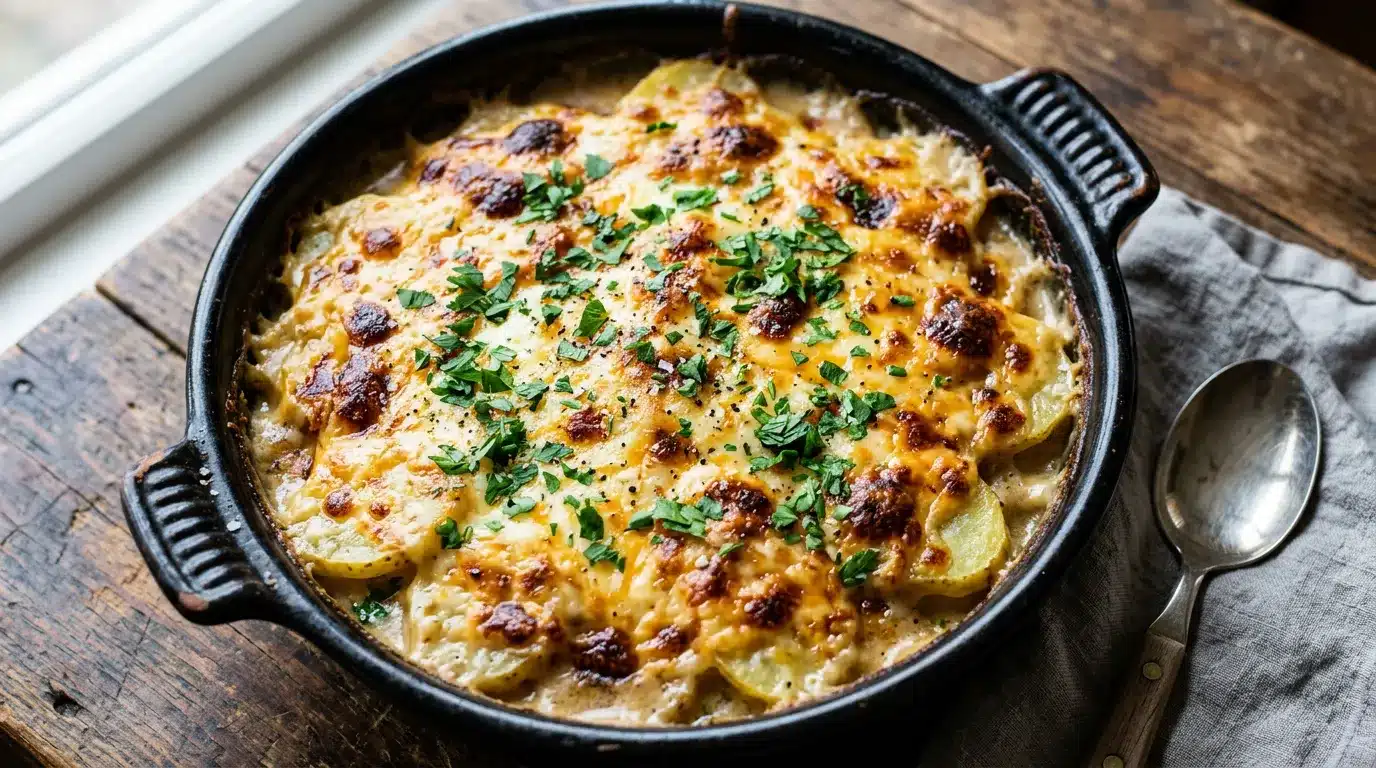
Each layer builds on the last. Get this right, and the rest takes care of itself.
Step 1: Butter the Dish
Generously coat your baking dish with softened butter, including the sides. This prevents sticking and adds a subtle richness to the outer edges.
A 9×13-inch dish works well for even cooking.
Step 2: Lay the First Potato Layer
Arrange dried potato slices in overlapping rows, like roof tiles. Keep them tight and flat.
Gaps mean uneven cooking. This first layer lays the foundation for everything stacked on top of it.
Step 3: Pour the Cream and Seasoning
Mix cream with minced garlic, salt, pepper, and a pinch of nutmeg.
Pour a measured amount slowly over each potato layer; even coverage ensures every slice absorbs flavor as it bakes.
Step 4: Add Garlic and Seasoning Between Layers
Scatter a little extra garlic and fresh thyme between layers rather than relying solely on the cream mixture.
Small additions mid-stack make a noticeable difference in the final depth of flavor.
Step 5: Distribute the Cheese
Sprinkle Gruyère between every two layers, not just on top.
Use slightly more on the final layer for that golden crust. Spread it to the edges, cheese near the sides, and it crisps up beautifully.
Baking Instructions and Timing
Low and slow is the approach here; rushing the oven temperature gives you a browned top with undercooked layers underneath.
| Stage | Temperature | Time | What to Look For |
|---|---|---|---|
| Initial Bake (Covered) | 375°F / 190°C | 45 minutes | Cream bubbling at edges, potatoes beginning to soften |
| Final Bake (Uncovered) | 400°F / 200°C | 20-25 minutes | Deep golden crust, knife slides through layers cleanly |
| Resting Period | Room temperature | 10-15 minutes | Layers settle and firm up for clean slicing |
A few things worth keeping in mind: cover tightly with foil for the first stage to trap steam.
Remove it only for the final stretch to brown the top.
My dog, Scout, always seems to appear the moment this comes out of the oven, and honestly, I don’t blame him.
Texture and Flavor Perfection Tips
Always season between layers, not just at the end; potatoes need salt worked in throughout.
Warm your cream slightly before pouring; cold cream straight from the fridge can cause uneven cooking.
Don’t skip the resting time after baking; it’s what gives you clean, structured slices rather than a sliding mess on the plate. Go generous with the cheese on top. A pale gratin is a sad gratin.
Serving Occasions and Pairings
Yukon gold potato gratin fits just as naturally on a weeknight table as it does at a holiday spread.
Holiday Dinners
A natural alongside roast turkey, glazed ham, or rib roast rich enough to hold its own against bold mains.
Casual Sunday Suppers
Pairs beautifully with a simple roast chicken or slow-braised lamb comfort food that feels a little special without any extra effort.
Vegetarian Mains
Serve alongside a crisp green salad and roasted seasonal vegetables for a satisfying meat-free meal.
Potlucks and Gatherings
Travels well, reheats beautifully, and feeds a crowd, always the dish that comes back empty.
Wine Pairings
A creamy Chardonnay or light Pinot Noir both complement the richness without overpowering the dish.
Recipe Note!
Yukon gold potato gratin is forgiving once you understand how it behaves.
If your cream sauce looks too loose before baking, whisk in a small amount of cornstarch.
This helps it set properly as it cooks
Altitude can affect baking time, so trust the knife test over the clock. For a richer flavor, swap a quarter of the cream for crème fraîche.
Frequently Asked Questions (FAQ’s)
1. Can You Use Yukon Gold Potatoes for Au Gratin?
Yes, their buttery texture and thin skins make them the best choice.
2. What’s the Difference Between Scalloped Potatoes and Potato Gratin?
Scalloped potatoes use a flour-based sauce; gratin always includes cheese.
3. Why is it so Hard to find Yukon Gold Potatoes?
Seasonal availability and regional growing limitations can make them harder to source locally.
4. Should You Boil Potatoes for Gratin?
No, raw slices absorb the cream better and hold their layers cleaner.
5. Which Potato is Closest to Yukon Gold?
Maris Piper or Dutch Cream potatoes are the nearest match in texture.