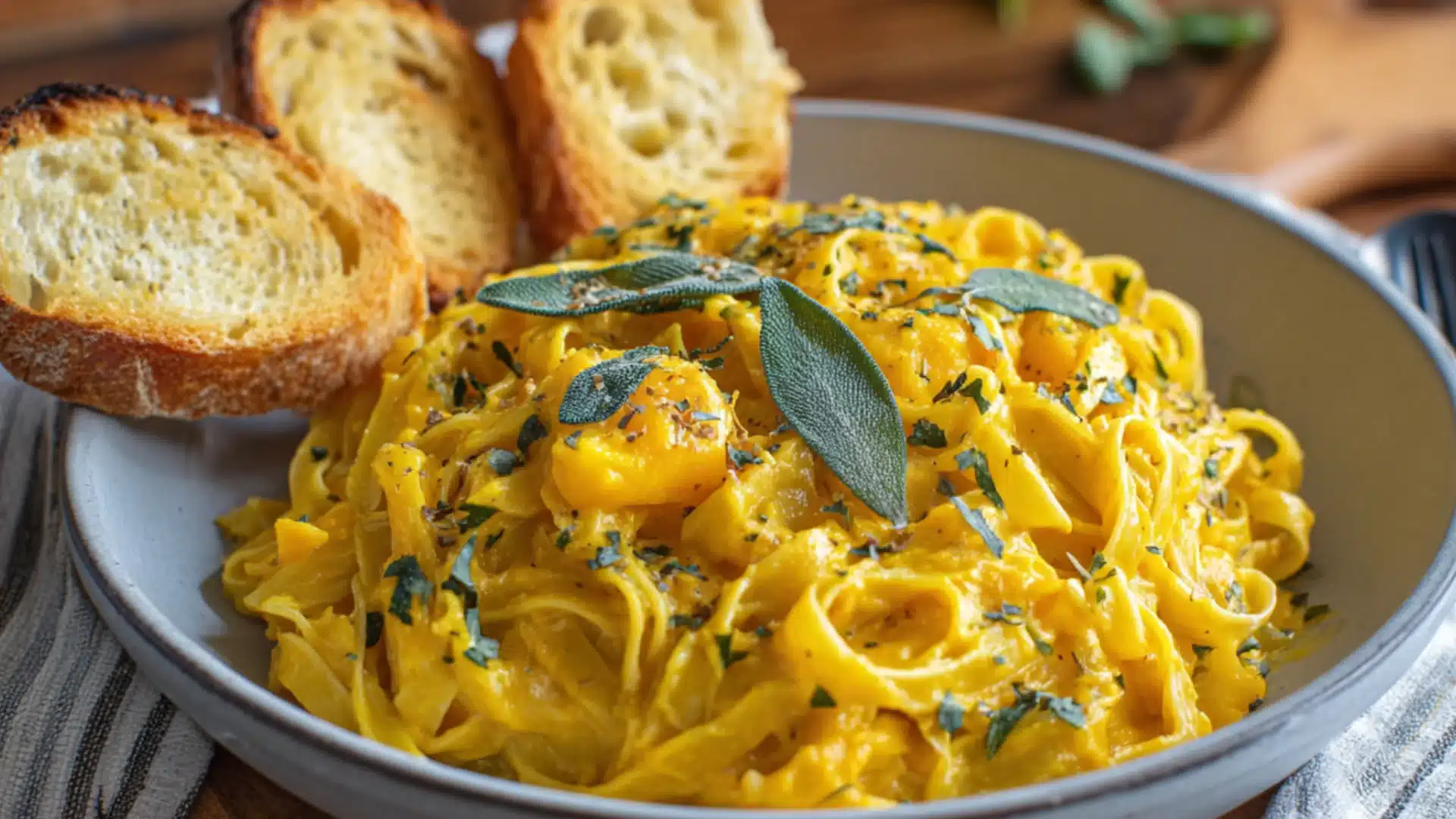
There’s a particular kind of Sunday in October when the air goes cool, and all you want is a bowl of something warm. Not heavy, not fussy, just deeply good.
That’s exactly why this butternut squash and sage pasta was born.
The squash roasts down into something almost silky, the sage goes crispy in butter, and together they coat pasta in a sauce that feels indulgent without a drop of cream.
Real fall flavors, minimal effort. And if one-pot meals are your thing, you might already know how I feel about them.
And this one earns a permanent spot in the autumn rotation!
Why This Pasta Has Everyone Coming Back for Seconds?
Butternut squash and sage pasta hits that rare sweet spot where simple ingredients do something really special together.
The natural sweetness of roasted squash plays perfectly against the savory, slightly nutty brown butter and crispy sage leaves.
It feels like proper autumn on a plate.
Filling enough to be a vegetarian main, and honestly impressive enough to put in front of guests.
Seasonal, simple, and genuinely delicious. That combination never gets old.
Ingredients You’ll Need
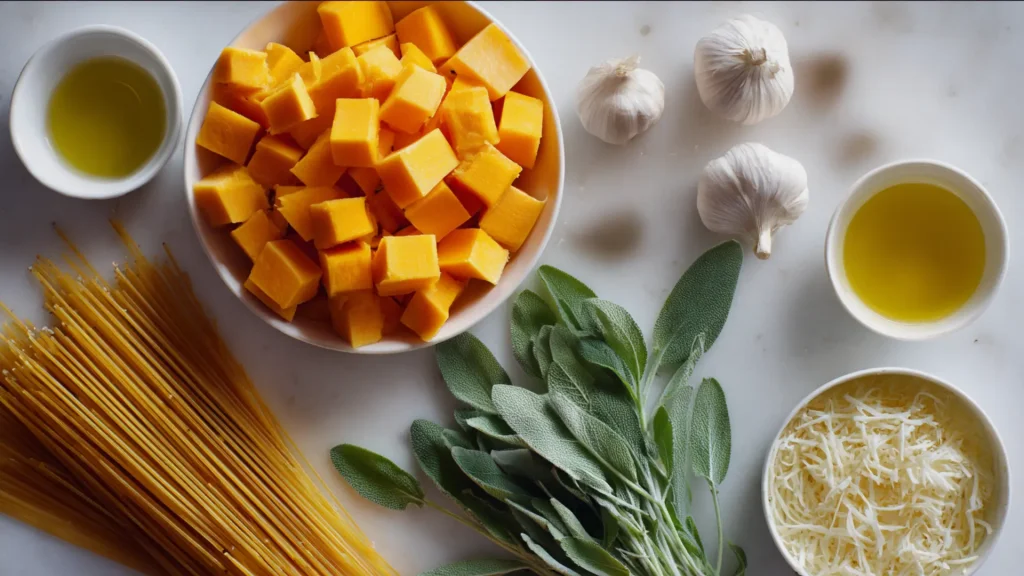
Core Ingredients:
- Butternut squash: The star of the show. You’ll want roughly 400–500g, peeled and cubed.
- Pasta: Penne, rigatoni, and fettuccine all work beautifully here. Pick whatever you have on hand.
Flavor Base:
- Garlic and onion: The quiet backbone of the whole dish.
- Fresh sage: Don’t swap this for dried. Fresh sage fried in butter is something else entirely.
- Olive oil or butter: I use both, because why choose?
A handful of Parmesan makes it restaurant-worthy. A splash of cream adds richness. Spinach or mushrooms both work really well if you want to bulk it out.
How to Make Butternut Squash and Sage Pasta
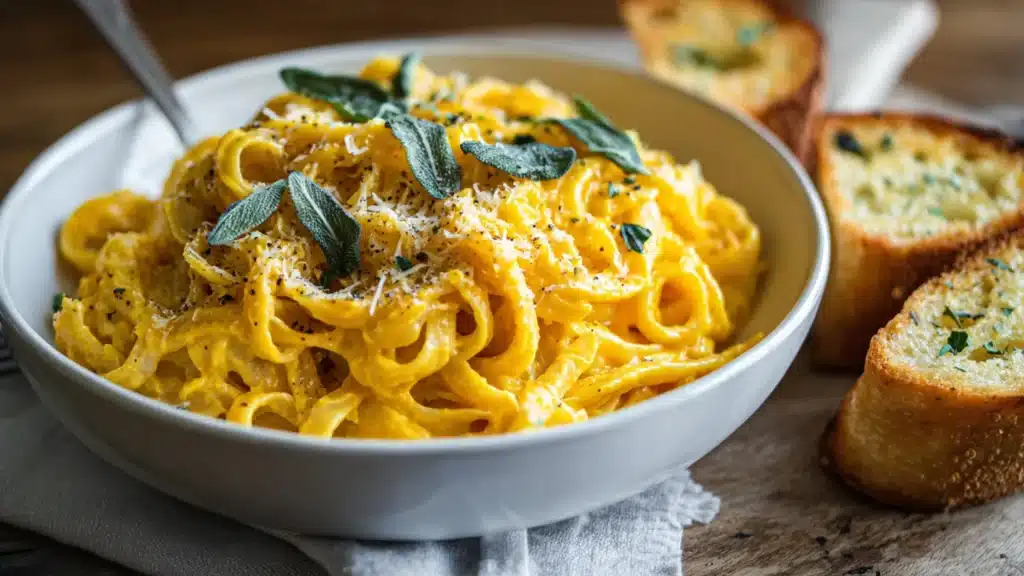
Start to finish, this comes together in under 45 minutes.
Getting this dish right is less about technique and more about paying attention to a few small things.
Step 1: Prepare the Squash
Peel the butternut squash and cut it into roughly equal cubes, about 2cm works well.
Uniform pieces mean everything cooks at the same rate. Toss with olive oil, a good pinch of salt, and a crack of black pepper.
A spare garlic clove thrown in here roasts alongside and adds a lovely mellow sweetness to the final sauce.
Step 2: Roast or Cook the Squash
Spread the squash out on a baking tray in a single layer.
Crowding the pan is one of the easiest ways to ruin this step. You want caramelized edges, not steamed, soggy cubes.
Roast at 200°C for 25-30 minutes, until soft and golden.
Once roasted:
- Mash roughly with a fork for a chunkier, more textured sauce.
- Blend smoothly if you prefer something closer to a creamy coating.
Both work. It really comes down to personal preference.
Step 3: Cook the Pasta
Salt your pasta water generously. It should taste almost like mild seawater.
This is one of the most overlooked steps, and no amount of sauce fixes bland pasta underneath.
Cook until just al dente, about a minute less than the packet suggests, then save a full mug of pasta water before draining.
That starchy water is what brings the sauce together later.
Bland sauce is almost always a seasoning problem, not a recipe problem. Taste as you go, and don’t be shy with the salt at every stage including the pasta water, the squash before roasting, and the final sauce.
Step 4: Build the Sauce
In a wide pan, melt the butter over medium heat and fry the fresh sage leaves for about 1 minute, until crispy.
Set them aside on a piece of kitchen paper. In the same pan, soften the onion and garlic until translucent, then add the roasted squash and stir everything together.
The sauce will look quite thick at this stage. That is completely normal and exactly where you want it before the pasta goes in.
Step 5: Combine and Toss
Add the drained pasta straight into the squash sauce and toss well.
Add the reserved pasta water a little at a time, just enough to coat every piece without being watery or gluey.
This step is worth slowing down for. Taking an extra minute here makes a real difference to the final texture.
Finish with the crispy sage leaves scattered over the top.
Too thick and it clumps. Too much water and it turns soupy. Add the pasta water in small splashes, toss, and check the consistency before adding more. You have more control than you think.
Step 6: Adjust Seasoning and Serve
Taste before you plate. The squash is naturally sweet, so it needs enough salt to balance properly.
A few finishing touches that make a real difference:
- A generous grating of Parmesan stirred through or shaved on top.
- A crack of black pepper right at the end.
- A small drizzle of good olive oil to finish.
Serve straight away while everything is hot and the sage is still crispy.
Overcooked pasta goes soft and loses its bite once it hits the warm sauce. Always pull it out of the water a minute early. It finishes cooking in the pan and holds up much better in the final dish.
How Do I Make This Pasta Totally Guilt-Free?
Pasta and diet goals do not always feel like they belong in the same sentence.
You want something warm and satisfying, but the cream, the butter, the cheese, it all adds up fast.
The thing is, butternut squash and sage pasta without cream is genuinely just as good.
The roasted squash blends into a naturally smooth sauce all on its own. Reserved pasta water loosens it perfectly.
A drizzle of olive oil replaces the butter if needed, and nutritional yeast works surprisingly well in place of Parmesan.
Same comfort, lighter plate. No compromises that actually feel like compromises.
Sides That Make This a Full Table Meal
This pasta is filling enough to stand on its own, but a few simple sides turn it into a proper spread.
Nothing here requires much effort.
- Garlic bread: The obvious one and honestly the right call. Something about tearing into warm, buttery bread alongside a bowl of squash pasta just works.
- Simple green salad: A sharp lemony dressing cuts through the richness nicely and takes all of five minutes to throw together.
- Roasted vegetables: Courgettes or tenderstem broccoli pair well with this without overcomplicating the meal.
My personal go-to is garlic bread and nothing else. Scout starts circling the kitchen the moment the sage hits the butter.
To Wrap Up
Butternut squash and sage pasta is the kind of meal that feels like much more effort than it actually is.
Sweet, savory, and satisfying, without anything complicated.
Swap in whatever pasta shape you have, throw in some spinach, skip the cream, make it your own. The base recipe is forgiving, and that is what makes it a keeper.
Give it a go this weekend and let me know in the comments how yours turned out.
Frequently Asked Questions (FAQs)
1. Can I Make Butternut Squash and Sage Pasta Ahead of Time?
Yes, the sauce keeps well in the fridge for up to three days. Just cook fresh pasta when you are ready to serve.
2. What Type of Sage Works Best for This Recipe?
Fresh sage is the only way to go here; dried simply does not crisp up the same way in butter.
3. Can I Freeze Butternut Squash Pasta Sauce?
Absolutely, the squash sauce freezes really well for up to two months, just thaw and toss with freshly cooked pasta.