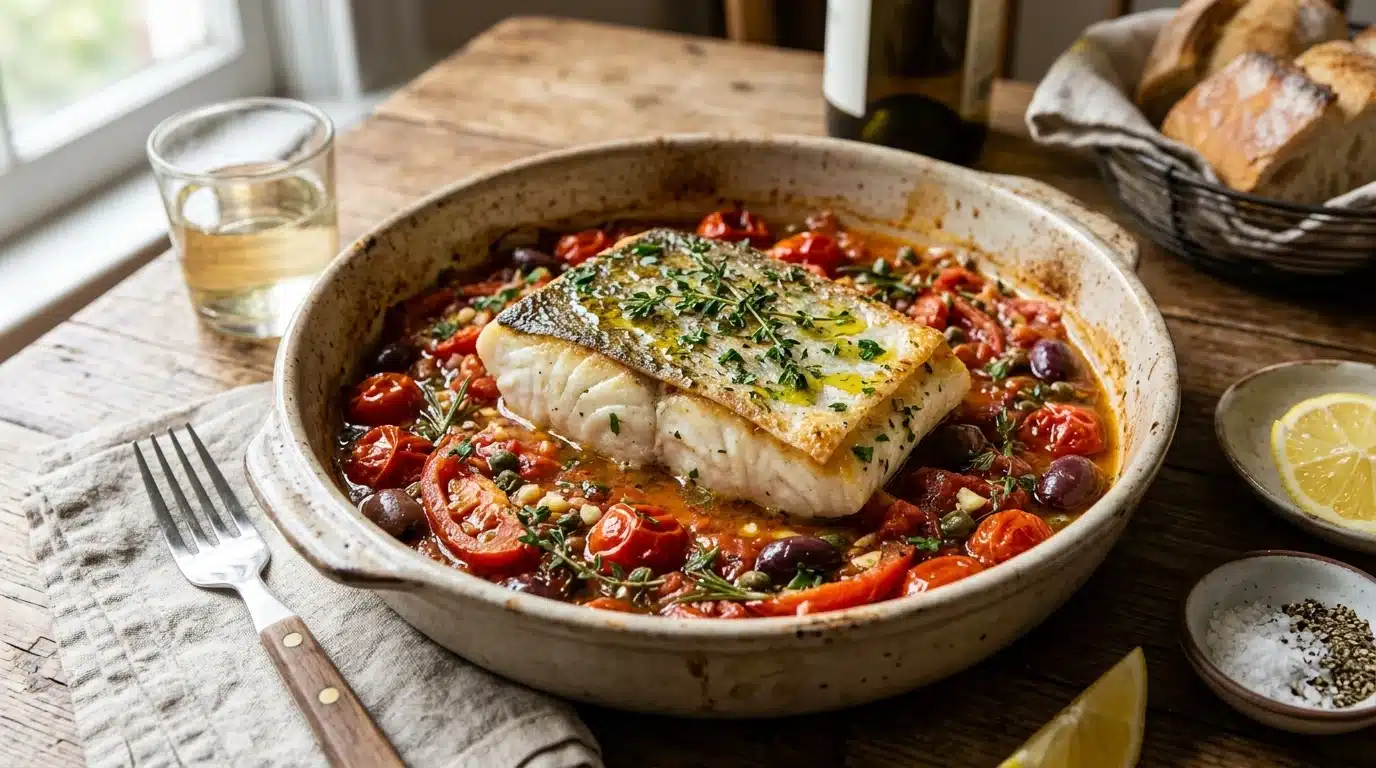
The first time I made Halibut and Tomato Provençal, I didn’t expect something so simple to taste so refined.
Just good fish, ripe tomatoes, herbs, and a little olive oil.
That’s it.
But you sit down to eat, and it feels like a proper restaurant meal you’d linger over with a cold drink.
If cooking fish at home feels intimidating, this dish is a perfect starting point.
By the end of this blog, you’ll have everything you need to pull it off with confidence.
Understanding Provençal Cooking Style
Provençal cooking from southern France reflects local produce.
Olive oil replaces butter. Tomatoes, garlic, olives, and fresh herbs do the heavy lifting in just one pot.
The flavors are bold but never complicated.
What makes this style so appealing is the restraint; nothing is overdone, nothing masked. Ingredients are treated with respect and given room to shine.
For a dish like Halibut and Tomato Provençal, that philosophy matters.
The fish stays clean and delicate, while the sauce builds warmth around it.
Selecting Fresh Halibut for Best Results
Fresh halibut should smell like the sea, clean and mild, not sharp or fishy.
Look for firm, white flesh with no yellowing at the edges.
At the fish counter, don’t hesitate to ask when it came in. Fillets cut from the thicker center section cook more evenly and hold up better in a sauce.
Frozen halibut works too, just thaw it slowly overnight in the fridge and pat it very dry before cooking.
Key Ingredients that Define This Dish
Every ingredient here pulls its weight. This is a short list, and that’s the point.
| Ingredient | Quantity (serves 4) | Substitute |
|---|---|---|
| Halibut fillets | 4 × 150–180g pieces | Cod, sea bass, or haddock |
| Ripe tomatoes (chopped) | 400g / 2 large | Good quality canned whole tomatoes |
| Garlic cloves (sliced) | 3 cloves | ½ tsp garlic paste |
| Kalamata olives (pitted) | 80g | Green olives or capers |
| Capers | 2 tbsp | Extra olives or a squeeze of lemon |
| Fresh thyme | 4–5 sprigs | ½ tsp dried thyme |
| Fresh flat-leaf parsley | Small handful | Fresh basil |
| Extra virgin olive oil | 3 tbsp | Light olive oil |
| Dry white wine | 60ml | Low-sodium fish stock or lemon water |
| Salt and black pepper | To taste | — |
Use the ripest tomatoes you can find. They are the backbone of the sauce quality, genuinely changing the result.
Cooking Technique that Preserves Delicate Fish
Halibut is lean and tender; it doesn’t need long on the heat, just the right method.
Here’s how to cook it without losing its natural texture.
Step 1: Build the Tomato Base
Heat olive oil in a wide, shallow pan over medium heat.
Add garlic and let it soften for about 60 seconds. Add tomatoes, wine, olives, capers, and thyme. Season lightly.
Let it simmer gently for 8–10 minutes until slightly thickened.
Step 2: Season the Halibut
Pat fillets completely dry with kitchen paper.
Season both sides with salt and pepper just before they go in. Dry fish browns better and holds its shape. Skip this step, and you’ll get steam, not sear.
Step 3: Nestle the Fish into the Sauce
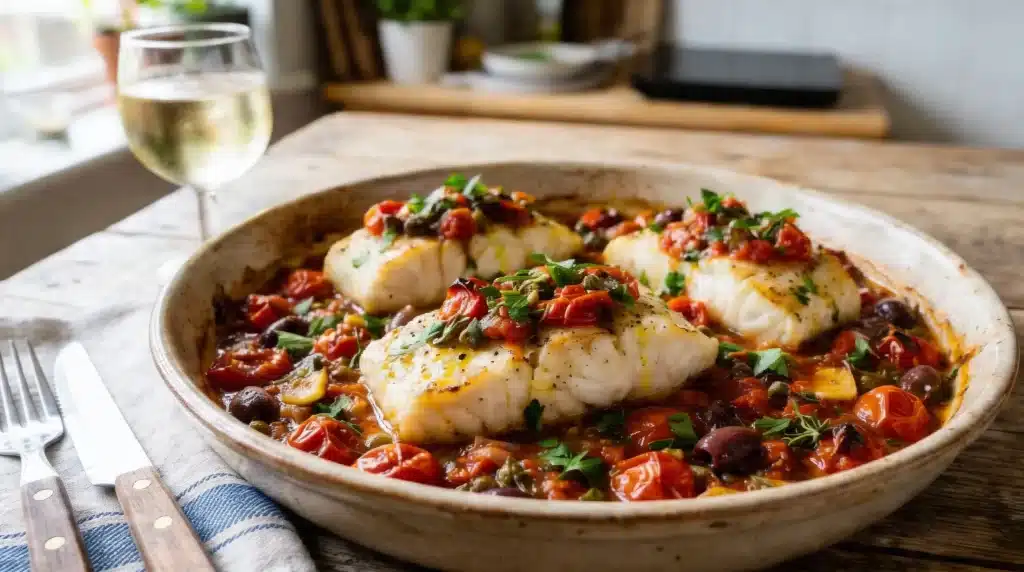
Lower the heat slightly. Place fillets directly into the simmering sauce. Spoon a little sauce over the top of each piece. Cover the pan loosely with a lid.
Step 4: Finish Gently
Cook for 7–9 minutes, depending on thickness.
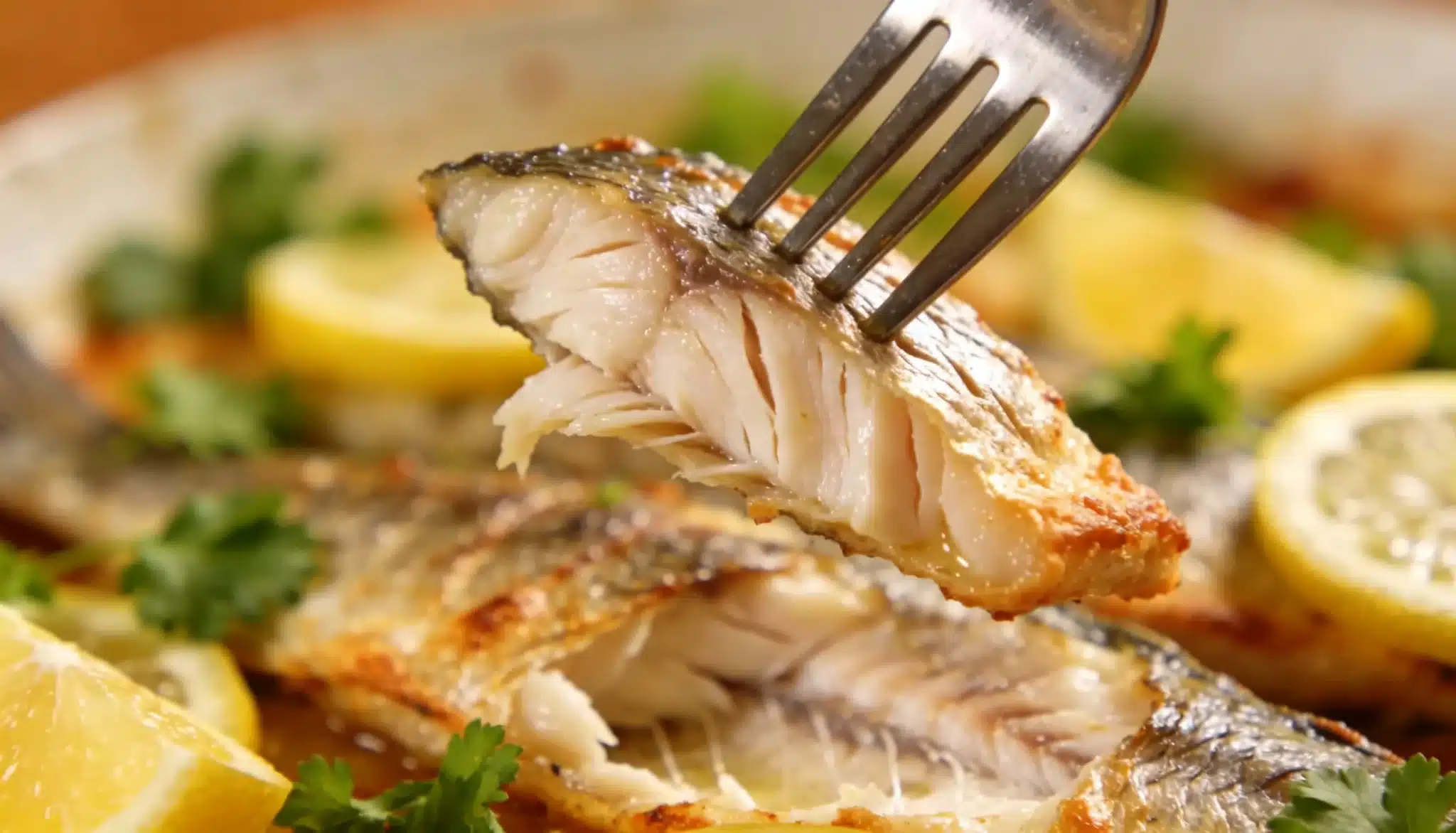
The fish is done when it flakes easily with a fork and turns opaque throughout. Don’t rush this. Overcooked halibut dries out and becomes chalky fast.
Step 5: Rest and Garnish
Remove the pan from the heat. Let it sit for 2 minutes.
Scatter fresh parsley over the top and finish with a small drizzle of good olive oil right before serving.
Layering Flavors the Provençal Way
Flavor in this dish isn’t added all at once; it’s built in stages, each one adding depth to the last.
1. Start with garlic in warm oil
Let garlic soften in olive oil first to create a fragrant, mellow base.
It’s the flavor foundation on which everything else rests.
2. Deglaze early with white wine
Adding wine right after the garlic lets the alcohol cook off fully.
What’s left is a subtle acidity that lifts the tomatoes and keeps the sauce from feeling heavy.
3. Let the tomatoes break down properly
Give the tomato base a full 8–10 minutes on its own.
Rushing this results in a thin, watery sauce. A little patience here pays off in every bite.
4. Add olives and capers mid-cook
Stirring these in after the tomatoes have reduced means their brininess disperses evenly through the sauce rather than sitting in concentrated pockets.
5. Finish with fresh herbs off the heat
Parsley added at the very end keeps its brightness.
Heat dulls fresh herbs quickly, so save them for the final moment
Light and Healthy Meal Benefits
This dish isn’t just good to eat, it’s genuinely good for you, and in ways that don’t require any compromise on flavor.
Halibut is a lean, high-protein white fish.
A single serving provides 30–35g of protein with little saturated fat, making it a good choice for health-conscious people.
It’s also rich in selenium, magnesium, and B vitamins, which support muscle function and heart health.
Cooked tomatoes are rich in lycopene, an antioxidant linked to reduced inflammation. Olive oil provides heart-healthy monounsaturated fats.
And herbs like thyme and parsley bring small but meaningful amounts of vitamins C and K to the plate.
Altogether, a portion of this dish comes in at roughly 350–400 calories, satisfying, balanced, and genuinely nourishing without feeling like diet food.
Serving Ideas for Any Occasion
Spoon the halibut and sauce over steamed rice or polenta, which absorbs the tomato well.
A chunk of crusty bread on the side works just as well and feels very naturally Provençal.
For a more considered dinner-table presentation, serve each fillet on a warmed plate, with the sauce ladled around it rather than over it.
Add steamed green beans or wilted spinach, drizzled with olive oil and sprinkled with a few herbs.
It seems like an effort, but it isn’t.
A chilled glass of dry white wine, something like a Vermentino or unoaked Chardonnay, completes the meal.
Practical Tips for Home Cooks
- Always pat halibut completely dry before it touches the pan; moisture is the enemy of good texture.
- Don’t move the fish once it’s in the sauce; let it cook undisturbed.
- Taste the sauce before adding the fish; it should be well-seasoned since the halibut itself is mild.
- Use a wide, shallow pan so the fillets sit in a single layer without overlapping.
- If your tomatoes are quite acidic, a small pinch of sugar balances the sauce without making it sweet.
- Room temperature fish cooks more evenly. Take it out of the fridge 15 minutes before cooking.
- Fresh herbs at the finish make a bigger difference than they seem to.
Wrap Up!
Provençal cooking has a way of making you slow down.
Not because it demands it, but because the food itself is calm, unhurried flavors, nothing fighting for attention.
Halibut and Tomato Provençal sits quietly and comfortably in that tradition.
What I find myself appreciating most, having made this more times than I can count, is how little it asks of you and how much it gives back.
No special equipment, no hard-to-find ingredients, no technique that takes years to get right.
Just a pan, good fish, and a sauce that practically builds itself.
Frequently Asked Questions (FAQ’s)
1. Can I Use Frozen Halibut for This Recipe?
Yes, thaw overnight in the fridge and pat completely dry before cooking.
2. What Can I Substitute if I Don’t Have White Wine?
Use low-sodium fish stock or a small squeeze of lemon juice with water.
3. How do I Know when Halibut is Fully Cooked?
It flakes easily with a fork and turns completely opaque throughout.
4. Can I Make the Tomato Sauce Ahead of Time?
Yes, prepare it up to two days ahead and reheat gently before adding fresh fish.
5. Is This Dish Suitable for a Gluten-Free Diet?
Yes, every ingredient in this recipe is naturally gluten-free.