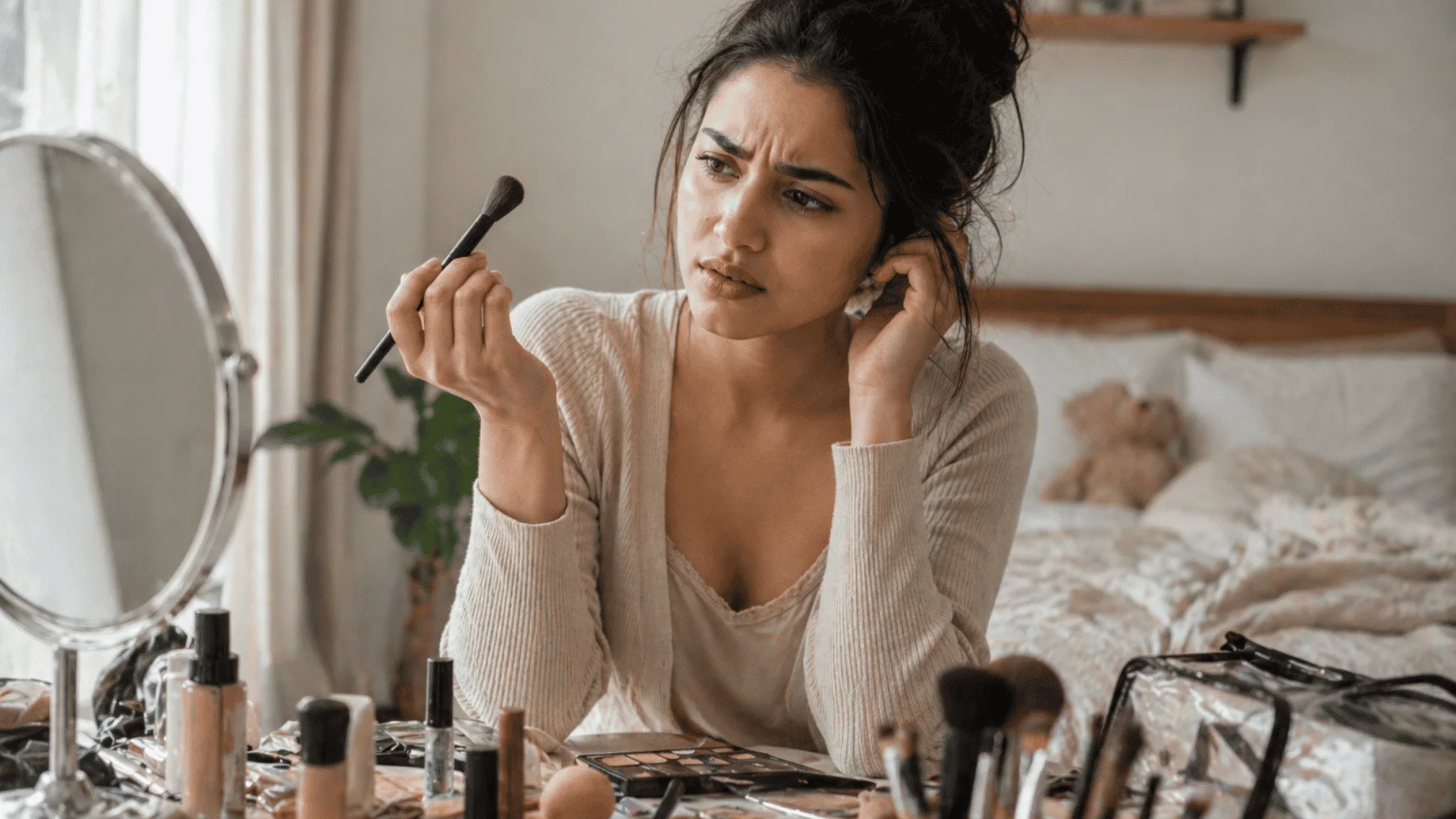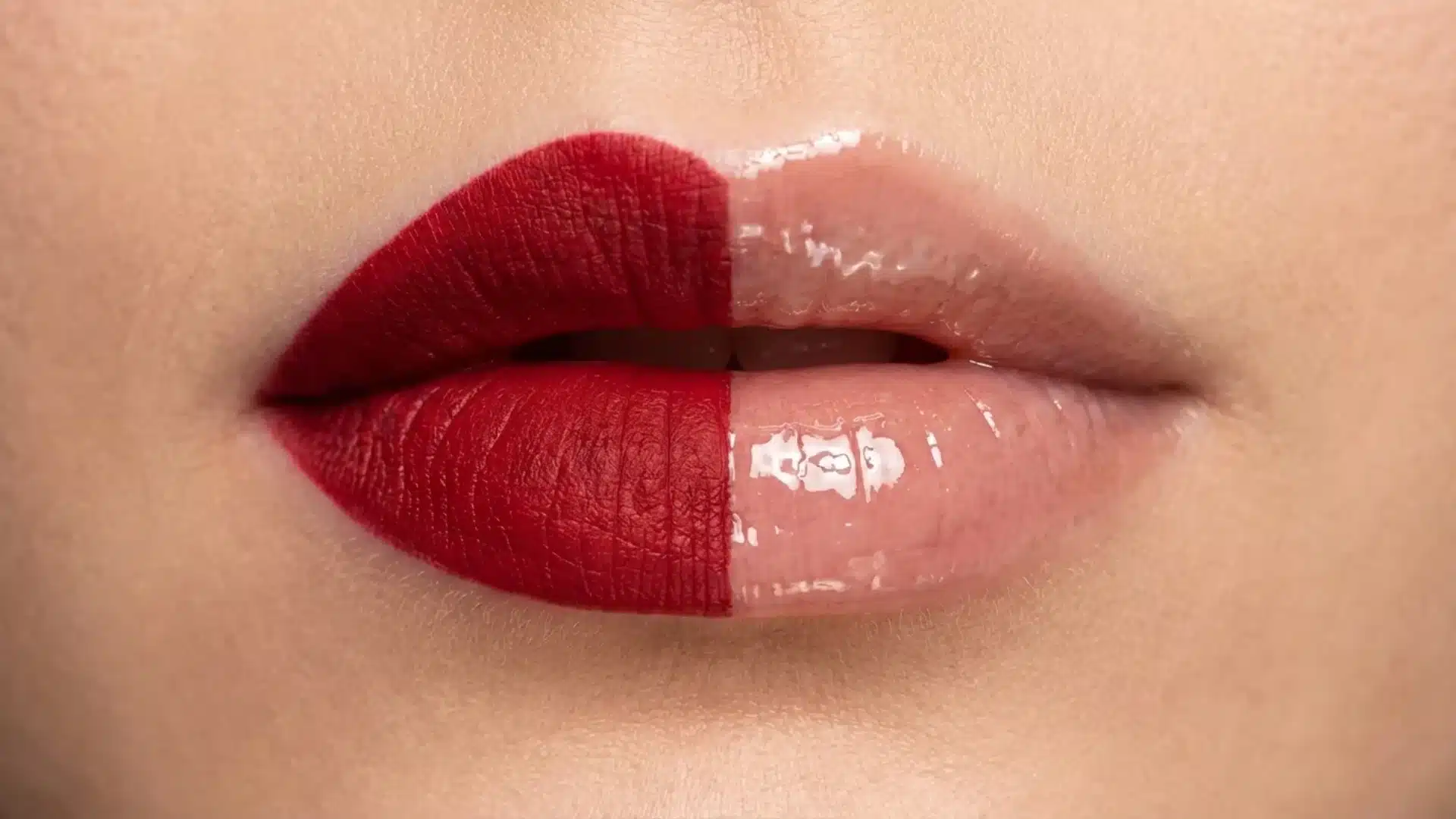
We’ve all been there, standing in front of our vanity, outfit on point, but staring at two very different options.
What’s it going to be today: the perfect put-together look or the shimmer with shine?
The lipstick vs lip gloss debate is as old as time, but is there a definitive answer?
Probably not, as it’s totally subjective, but worry not, ahead we’ll break down the differences between lipstick and lip gloss, which will help you decide and choose the one that suits your aura the best.
What is a Lipstick?
Lipstick is a classic that never really goes out of style.
Whether you’re heading into a big meeting or out for a Saturday evening with friends, it has a way of pulling your whole look together with very little effort.
At its core, lipstick is made from a blend of ingredients that give it structure, color, and comfort on the lips:
- Wax – provides shape and makes the application smooth
- Oils – help with glide and prevent tugging
- Pigments – add color and opacitY
It combines moisturizing oils with pigments to prevent dryness while delivering rich color.
Available in matte, cream, and glossy finishes, it offers versatile shades from subtle nudes to bold reds, adding texture, style, and confidence to any look.
What is a Lip Gloss?
Lip gloss brings a smooth, hydrating shine that feels effortless from the moment you apply it.
It’s lightweight, easy to wear, and instantly gives your lips a fresh, dewy look without much effort.
Unlike lipstick, lip gloss has a lighter pigment, allowing its signature shine to take center stage rather than a bold block of color.
The result is a softer, more natural finish that enhances your lips instead of defining them.
What gives lip gloss its unique feel and appearance is its formulation:
- Higher oil-to-wax ratio – creates a smooth, glide-on texture
- Pigments – add a hint of subtle color
- Nourishing oils – keep lips soft and hydrated
- Petroleum jelly – locks in moisture and adds shine
- Fragrance – enhances the overall experience
And if you’re wondering if lip gloss is makeup, it’s not. At least not according to me.
I find it to be a more relaxed, low-maintenance kind of beauty. Simple, effective, and often underrated. The glossy finish reflects light beautifully, making lips look naturally fuller and plumper.
Lipstick vs Lip Gloss – How They Actually Compare
Not sure which one suits you better? Here’s a quick breakdown across the four things that matter most.
| Lipstick | Lip Gloss | |
|---|---|---|
| Comfort | Comfortable in creamy formulas; matte can feel heavy and drying | Buttery, smooth, and easy to apply and reapply |
| Longevity | Longer lasting; higher pigment concentration helps it grip the lips | Wears off faster; needs regular reapplication throughout the day |
| Application | Applied directly from a bullet or with a brush; requires some precision | Comes with a wand; quick and fuss-free |
| Finish | Dense, opaque, bold, and vibrant | Reflective, glassy shine that makes lips look fuller and softer |
When to Choose Lipstick Over Lip Gloss (and Vice Versa)
Go for lipstick when you want your lips to do the talking.
A vivid red for work, a deep berry for dinner lipstick keeps up all day without much fuss.
It stays in place, delivers a polished finish, and lets you forget about your lips once it’s on.
Reach for gloss when the look calls for something lighter.
Casual outings, lazy Sundays, and low-effort days gloss give you that fresh, juicy finish without any real commitment.
A quick swipe and you’re done.
Let your outfit guide the decision.
As a general rule:
- Bold, structured outfits, lipstick to match the energy.
- Soft, relaxed styles gloss to keep things easy and effortless.
When your skin is the star, your lips should play a supporting role.
Keep them simple, complementary, and never competing with the rest of the look.
Is Matte Lip Gloss a Thing? How Does That Work?
It sounds like a contradiction, and honestly, it kind of is.
Traditional gloss is all about shine, so a matte version goes against everything the product stands for.
But yes, matte lip gloss does exist, and it works better than you’d expect.
Here’s how it actually works:
- The formula: matte gloss formula uses less oil and more mattifying agents, like silica, to reduce shine while keeping that smooth, glide-on texture.
- The finish: it lands somewhere between a traditional gloss and a matte lipstick; soft, velvety, and not quite either.
- The feel: lighter than a matte lipstick, without the drying effect most matte formulas are known for.
Think of it as the best of both worlds, the comfort of a gloss with a finish that’s a little more understated.
How to Use Lipstick and Lip Gloss Together?
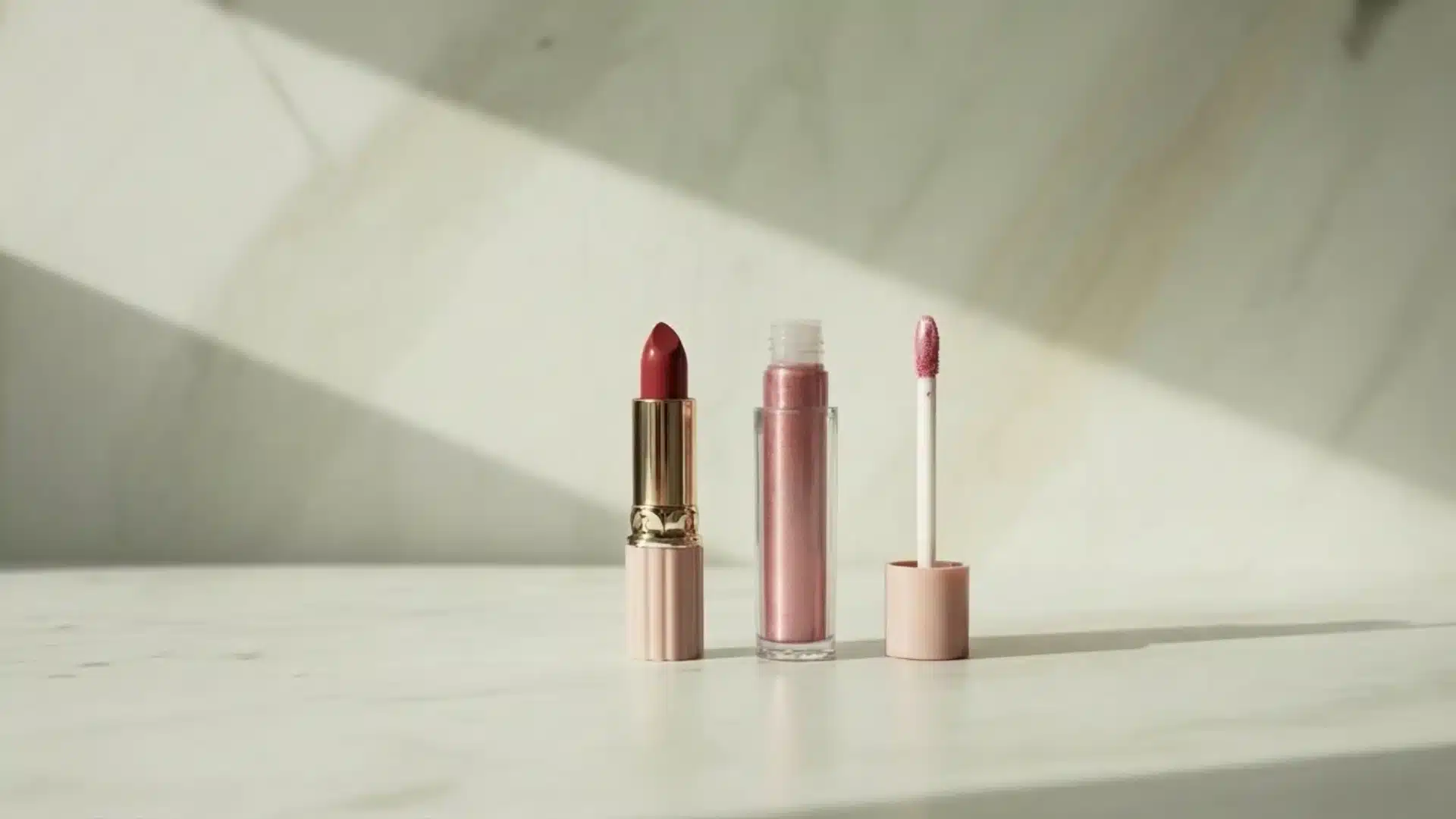
Absolutely, you can use both, and it’s one of the best ways to enhance your lips.
Step 1: Apply Your Lipstick as The Base
Start by applying your lipstick evenly across your lips.
Let it sit for a few seconds so the color sets and gives you that rich, defined finish.
Step 2: Dab Gloss in The Center
Take a small amount of lip gloss and dab it right in the center of your lips.
This adds a dimensional shine that makes your lips look fuller and more vibrant.
Step 3: Keep It in The Middle
Don’t spread the gloss all the way to the edges.
Keeping it in the center helps maintain those clean lipstick edges. Remember, a little goes a long way.
Step 4: Pick the Right Combo
Not sure which two to pair? Start with a nude or brown lipstick and top it with a clear or peach gloss.
It’s a classic, versatile combination that works for almost any occasion.
Lipstick vs Lip Gloss vs Lip Stain
Lip stain is the low-maintenance option of the three.
It soaks into the lips rather than sitting on top, leaving behind a sheer wash of color that looks natural and lasts surprisingly long.
No waxy feel, no sticky finish, just a subtle tint that stays put through coffee, lunch, and most of the day without much touching up.
| Lipstick | Lip Gloss | Lip Stain | |
|---|---|---|---|
| Finish | Bold, opaque, defined | Glossy, reflective, shiny | Sheer, natural, skin-like |
| Longevity | Long-lasting | Wears off quickly | Very long-lasting |
| Comfort | Can feel heavy in matte formulas | Buttery and smooth | Lightweight, barely-there feel |
| Application | Bullet or brush | Wand | Felt tip or liquid applicator |
| Best For | Statement looks, events | Every day, casual wear | Natural looks, long days |
| Reapplication | Occasional | Frequent | Rarely needed |
Avoiding Unsafe Ingredients in Lip Products
Lip products sit on your lips all day, and considering how often they get ingested without you even realizing it, what’s in the formula genuinely matters.
A quick scan of the ingredients list before buying can save a lot of trouble down the line.
Ingredients worth watching out for:
- Lead and heavy metals: still found in trace amounts in some lipsticks and are linked to long-term health concerns.
- Parabens: common preservatives that some studies suggest may disrupt hormones.
- Synthetic fragrances: a frequent trigger for sensitive skin and allergic reactions.
- Petroleum-derived ingredients: not harmful for everyone, but worth noting if you prefer cleaner formulas.
When in doubt, look for products that are dermatologist-tested, fragrance-free, and transparent about their full ingredient list.
Final Takeaway
Sometimes, you don’t need to pick a side; instead, try both options.
When confronted with a question like this, consider a combination that showcases the best of both worlds instead of confusing yourself between lipstick vs lip gloss.
Use your favorite matte nude lipstick and add a sheer gloss on top, like a cherry on a sundae.
If you’re still uncertain, choose a bold lipstick to make a statement, and layer a gloss for all-day shine.
Experimenting this way allows you to customize your look effortlessly.
Frequently Asked Questions (FAQ’s)
1. Can Lipstick Cause Perioral Dermatitis?
Yes, it can. Certain ingredients, such as fragrances, preservatives, or heavy waxes in lipstick, may irritate the skin around your lips and trigger perioral dermatitis.
2. What is the Forbidden Lipstick?
The “forbidden lipstick” refers to shades considered too bold or unconventional for certain settings, such as deep black or stark white, that challenge traditional beauty norms.
3. What Lip Color is Best for Rosacea?
Soft, cool-toned shades like muted pinks or berries work best. They help balance redness without making it more noticeable. Always choose fragrance-free, gentle formulas.
4. Which Should be Applied First, Lipstick or Lip Gloss?
Always apply lipstick first. It sets the base color and defines your lips. Then layer gloss on top for added shine and fullness.